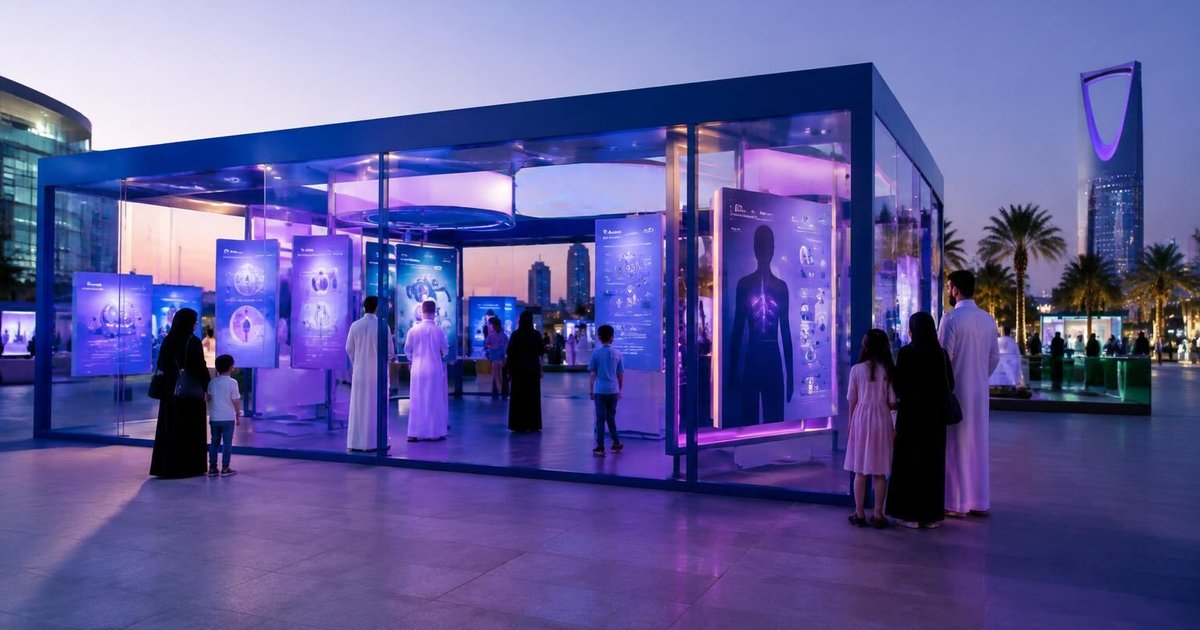

The congress is over. Speakers have left the stage, the exhibition team is dismantling the stand and the event report shows a healthy attendance figure. Three weeks later, someone in the brand team asks what happened to the scientific questions, requests for resources and conversations that took place. If the answer is spread across badge scans, spreadsheets, emails and personal notes, the programme has lost part of the value it created.
For pharmaceutical teams building a post-congress omnichannel HCP engagement strategy in Saudi Arabia, the opportunity is not to send more messages. It is to create an appropriate, joined-up experience in which a healthcare professional can continue a relevant conversation through an approved channel at a useful time. The word 'omnichannel' should describe coordination from the audience's perspective, not a checklist of every platform a company can purchase.
Saudi Arabia's wider healthcare transformation has made digital access and connected care important national priorities. Still, one should not assume every clinician wants the same digital format. Some prefer an on-demand scientific resource, others a scheduled medical discussion or a brief accredited educational activity. Effective engagement begins with permission, purpose and relevance.
Visual summary
See the whole article at a glance
Follow the journey, then explore how the key ideas connect.
Article journey
Topic mind map
- Define what the event started
- Design a coordinated content architecture
- Put compliance and channel permissions at the centre
+3 more topics in the full guide
Questions answered (9)
- 1. Define what the event started?
- 2. Segment by information need rather than by volume?
- 3. Design a coordinated content architecture?
- 4. A practical 90-day plan, not a mandatory cadence?
- 5. Put compliance and channel permissions at the centre?
- 6. Integrate technology only where it removes friction?
- 7. Measure the right post-event outcomes?
- 8. The operating model makes the technology useful?
- 9. Frequently asked questions?
Define what the event started?
Before the congress, clarify the type of legitimate interaction you expect: an HCP might ask for a published scientific paper, request a technical device demonstration, submit a medical question or register for an approved follow-up session. These requests have different owners. A scientific question may belong to medical information; a promotional request may be handled through the approved commercial route; an accredited CPD learning activity requires the educational provider's governance.
A useful post-event journey maps four stages: the encounter, the permitted record of the request, the appropriate response, and a voluntary opportunity for continuing engagement. Do not take an attendance list and automatically turn it into a marketing audience. Define the lawful basis and communication permissions for every channel.
Segment by information need rather than by volume?
An HCP's specialty and declared interest may help determine relevant approved materials, provided collection and processing are lawful. But segmentation should not become uncontrolled personal profiling. Start with broad, legitimate audience needs such as clinical education, device training, service implementation or scientific information. Then offer clear routes to the right approved content.
A cardiologist who requests an evidence summary should not receive an unrelated stream of general promotional updates. A biomedical engineering professional might need product configuration or training information rather than therapy messaging. For a multinational programme, consider Arabic and English preferences, local workflow relevance, and whether access should be restricted to verified professionals.
Pharma HCP portals in Saudi Arabia work best when they solve identifiable problems: finding approved reference material, submitting a legitimate information request, accessing event resources or registering for a suitable professional session. A portal that merely repeats a brochure in a more complicated interface adds little value.
Design a coordinated content architecture?
Build a content map with the following fields: topic, target professional audience, purpose, content classification, medical or regulatory approver, source references, approval expiry, language, delivery channel and owner. Distinguish disease education, medical information, product promotion and independent professional education. This architecture prevents a PDF created for one setting from being casually reused in another with a different audience or regulatory status.
Plan a clear content hierarchy. A short follow-up note can acknowledge a requested resource, while a deeper HCP portal may house the corresponding authorised material. A webinar might address a broader scientific question through an approved and appropriately governed format. Each interaction should give the clinician a way to stop, choose another format or request more detail; it should not force them into an escalating automated sequence.
A strong bilingual experience goes beyond translating buttons. Check Arabic interface direction, terminology, typography, accessibility, mobile performance and content-review parity. The final Arabic version must receive the appropriate review, including medical meaning and local regulatory expectations.
A practical 90-day plan, not a mandatory cadence?
Days 0–7: fulfil commitments. Reconcile legitimately captured requests, remove duplicates, validate ownership and route scientific questions to the appropriate teams. Provide resources requested through channels that have an appropriate basis and permission. Resolve content issues and document any event-related quality or safety escalations according to sponsor procedures. The goal is respectful closure of specific commitments, not a mass campaign.
Days 8–30: make approved resources accessible. Review common educational questions without disclosing personal details. Where there is a legitimate need and appropriate authorisation, publish an HCP resource page or provide access to an approved recording or summary. Confirm that content is current, correctly classified and accessible to the intended audience. Assess whether the experience has unnecessary login barriers or mobile usability problems.
Days 31–60: offer relevant optional engagement. An appropriately approved scientific discussion, technical demonstration or educational session may be useful for some HCPs. Participation should be voluntary, and contact must follow applicable communication rules. Use engagement history only for authorised purposes and avoid treating a click as evidence of clinical practice change.
Days 61–90: learn and improve. Review completed requests, content usefulness, unanswered questions, opt-outs, audience satisfaction and operational issues. Compare actual results against agreed objectives. Decide what to stop, simplify or develop for the next event. The suggested periods are an operational planning example—not statutory deadlines or proof that every HCP should receive a 90-day sequence.
Put compliance and channel permissions at the centre?
The SFDA code of conduct governs pharmaceutical advertising and promotional materials in Saudi Arabia, including relevant electronic communications. Approved claims, audiences, scientific references and safety information must be handled according to applicable requirements. The organisation's medical, regulatory and compliance teams should determine what is allowed in each channel. An approved congress presentation should not automatically be repurposed into a public social-media advertisement.
SCFHS CPD ethical standards also place importance on independent educational content and appropriate sponsor boundaries. When accredited professional development is involved, distinguish the educational provider's responsibilities from a sponsor's commercial objectives. The channel can be digital without changing the fundamental ethical requirements.
Under the Saudi PDPL framework, direct marketing requires appropriate consent and an effective way to opt out. Health data are sensitive and must not be repurposed for marketing even with consent, according to official guidance. Build purpose limitation, access controls, retention, deletion workflows and vendor responsibilities into the architecture. Where HCP professional data are processed, apply relevant legal and privacy requirements rather than assuming professional status eliminates privacy rights.
Integrate technology only where it removes friction?
A connected journey may involve a congress registration platform, an HCP portal, an approved messaging system, a CRM and dashboards. Do not connect systems merely because integration is technically possible. Define the source of truth for permitted contact preferences, approved content versions and request status. Map the flow of data and what happens if an interface fails. Use role-based permissions and logs so sensitive workflows remain restricted to the appropriate team.
In procurement, ask whether a claimed integration is available, configured, tested and approved, or still a future development task. Establish which system owns the information, who can correct it, whether it can be exported and what will happen after a contract ends. Privacy by design should be demonstrated through actual operational decisions, not a decorative badge on a presentation.
Measure the right post-event outcomes?
The first dashboard should reflect service quality: percentage of legitimate requests appropriately routed, completed follow-ups within agreed service targets, content accessibility and errors. The next layer can track voluntary engagement with approved HCP content, such as unique eligible users accessing a requested resource or registering for a relevant session. A third layer should record qualitative feedback and knowledge gaps to inform future content.
Never label all email opens as meaningful engagement; technical restrictions can make email-open metrics unreliable, and an open does not imply understanding. Likewise, increased portal visits do not establish changes in prescribing, patient outcomes or product demand. If the programme seeks to study clinical or commercial impact, create an appropriate separate evaluation design rather than using weak engagement proxies.
For pharmaceutical event follow-up digital journeys, report both successful completion and attrition. How many requests were in scope? How many were not fulfilled and why? How many users declined further messages? Which content drew specific questions? Measuring opt-outs alongside engagement is a sign of respect for the audience rather than a failure of marketing.
The operating model makes the technology useful?
Assign a journey owner who can coordinate the event team, medical affairs, marketing, digital, privacy and external partners. Establish content-approval service levels, escalation for safety concerns, access reviews and planned refresh dates. Use brief working meetings to solve cross-functional issues rather than treating omnichannel as a purely digital marketing project.
For a programme spanning Riyadh, Jeddah and the Eastern Province, keep content definitions and metrics consistent while acknowledging different meeting formats, hospital policies and local access. Evaluate whether individual clinics or HCPs have practical reasons to prefer different channels. The outcome should be coordination, not forced uniformity.
Spectra Solutions MEA positions its digital-health capability around apps, portals, data platforms and connections between physical events and continuing engagement. For healthcare organisations, that offers a way to design a connected experience from initial meeting to approved, useful follow-up, subject to project-specific technical and governance arrangements.
Frequently asked questions?
What should happen within the first week after a medical congress? Route and fulfil legitimate requests, resolve issues, protect personal data and document outstanding work through the correct owners.
Is an HCP portal necessary? Only when it offers a relevant benefit, such as accessible approved resources or structured scientific requests; a simpler route may be better for a small programme.
Can every attendee receive marketing messages? No. Attendance alone does not establish consent or another valid lawful basis for all subsequent communications.
How should we measure omnichannel effectiveness? Track service completion, relevance, voluntary engagement, opt-outs and audience feedback, using clear definitions and appropriate safeguards.
Does digital engagement prove increased prescription volume? No. An observed interaction is not sufficient evidence of a prescribing change or a causal commercial outcome.
The lasting value of a congress is not the number of contacts captured. It is the number of legitimate commitments fulfilled and the relevance of the professional experience that follows.
Explore Spectra's digital health solutions: Explore Spectra services
Contact: service@spectra-mea.com
English references
Have a question we did not cover?
Talk to our team about HCP engagement, experiential and digital strategy across the GCC.
Ask our team