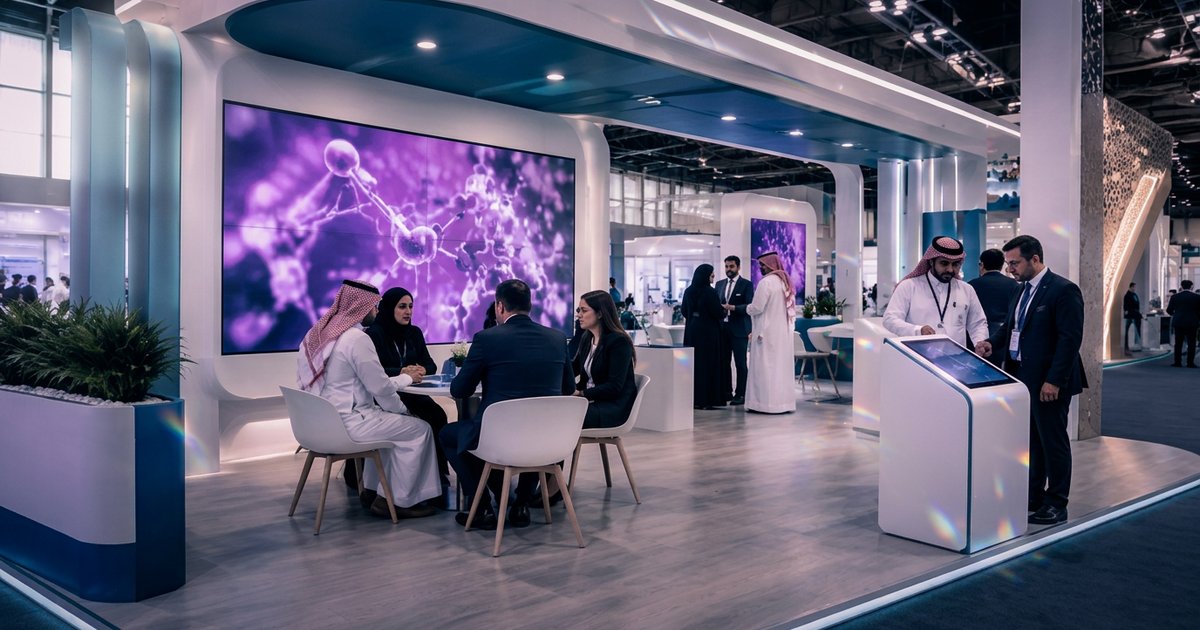

A medical symposium in Riyadh can be beautifully produced, well attended and perfectly timed—and still leave its pharmaceutical sponsor unable to answer one uncomfortable question: what did the investment actually achieve? The problem is rarely the stage. It is the absence of an agreed definition of success before anyone books the venue. In a market where scientific exchange, commercial objectives and regulatory responsibilities intersect, pharmaceutical event ROI measurement in Saudi Arabia demands a more disciplined approach than comparing the budget with the number of registrations.
An event may be a scientific symposium, advisory board, product launch, medical congress satellite session or smaller HCP meeting. These are not interchangeable. A scientific educational meeting should be assessed on the quality and integrity of education; a launch may also have specific, approved commercial objectives. Different purposes require different metrics. Assigning the same lead-generation target to every format risks encouraging the wrong behaviour and compromising trust.
Visual summary
See the whole article at a glance
Follow the journey, then explore how the key ideas connect.
Article journey
Topic mind map
- Start with the decision the event should support
- Which KPIs should a Saudi pharma brand dashboard include
- Build data protection into the measurement design
+3 more topics in the full guide
Questions answered (9)
- 1. Start with the decision the event should support?
- 2. Build a four-layer event measurement framework?
- 3. Which KPIs should a Saudi pharma brand dashboard include?
- 4. Respect the boundary between education and promotion?
- 5. Build data protection into the measurement design?
- 6. Connect the experience to the next 30 days?
- 7. A useful procurement question: what will success evidence look like?
- 8. A pre-event scorecard you can use?
- 9. Frequently asked questions?
Start with the decision the event should support?
Before discussing an agenda or production concept, ask three questions. Who is the audience? What legitimate knowledge, experience or engagement gap are we addressing? What decision will become easier after the event? For example, a medical affairs team may want to know whether the intended specialists understood a scientific topic and which unanswered questions remain. A brand team may want to assess whether appropriately targeted HCPs engaged with approved content. An operations team may want to evaluate efficiency, attendance and delivery quality.
Convert those questions into a one-page measurement brief. Define the activity's educational or promotional classification, intended HCP segments, approved messages, baseline, measurement owner, data source and reporting deadline. Include a clear note about what the activity will not measure. A well-designed KPI protects the project from being evaluated retrospectively against goals nobody approved.
Build a four-layer event measurement framework?
Layer 1: Delivery quality. Track the basics: sessions delivered as planned, technical incidents, speaker preparedness, registration accuracy, attendee support, accessibility and budget adherence. These indicators show whether execution worked; they cannot establish medical value or commercial return alone.
Layer 2: Relevant participation. Measure attendance by legitimate, defined audience segment where lawful and appropriate. Distinguish registered people from verified attendees, unique HCPs from repeated check-ins, and meaningful session participation from passing booth traffic. A high attendance figure is less useful when the intended specialties are underrepresented.
Layer 3: Educational engagement. For education-focused activities, use optional anonymous knowledge checks, questions submitted, content-resource access and structured feedback. Compare pre- and post-session understanding only when the questions are valid, privacy-safe and educationally suitable. Do not portray a change in quiz scores as proof of improved prescribing or patient outcomes.
Layer 4: Appropriate follow-through. Track completion of approved follow-up tasks, responses to requested scientific information, opt-in resource delivery and unresolved medical questions routed to the responsible team. Where an event is promotional, separate the compliant commercial metrics from non-promotional scientific activities. Never assume that an HCP interaction caused a prescription, market-share change or clinical outcome.
Which KPIs should a Saudi pharma brand dashboard include?
A practical dashboard can group indicators under operational, audience, engagement and follow-up headings. Consider: confirmed attendance rate = verified attendees ÷ valid registrations; target-audience representation = attendees meeting the agreed audience definition ÷ total verified attendees; engagement rate = unique eligible participants completing a specified interaction ÷ eligible participants; and follow-up completion = approved follow-up items closed within the agreed period ÷ total approved items. Show the numerator, denominator and exclusions with every percentage.
For costs, use cost per qualified engagement rather than the vaguest possible cost per attendee. Define 'qualified' before the event: perhaps an eligible HCP who chose to participate in an approved scientific discussion of a minimum substantive standard. The exact definition must fit the activity, law and data policy. A lower unit cost is not inherently better; a carefully designed scientific interaction may justify more resources than an untargeted reach campaign.
Some teams will request a single ROI percentage. Be cautious. Financial ROI conventionally requires incremental, attributable financial benefit and cost. Most one-off scientific meetings cannot demonstrate that causal relationship with confidence. Where attribution is unavailable, report cost-effectiveness, engagement quality and programme contribution rather than inventing financial return. If a commercial team uses a formal attribution model, describe its assumptions and limitations openly.
Respect the boundary between education and promotion?
Saudi pharmaceutical marketing is subject to SFDA requirements. Its code of conduct calls for accurate, balanced information and alignment with approved claims and distinguishes requirements for promotional communications. For SCFHS-accredited continuing professional development, the SCFHS Code of Ethics requires objective content, independence from inappropriate sponsor influence and educational material free from advertising. Accordingly, the event brief should identify which spaces, materials, presentations and interactions are promotional and which are independent education. The classification is not a visual branding exercise; it shapes approvals and evaluation.
Work with the sponsor's regulatory, medical, compliance and legal functions before designing feedback forms or contact journeys. Claims must pass the appropriate review process. Invitees, disclosures, hospitality, material distribution, content access and documentation need activity-specific checks. An agency can support execution and workflow, but the responsible sponsor and accredited provider retain their respective obligations.
Build data protection into the measurement design?
A delegate's name, specialty, employer, contact details and attendance record are personal information. Data collection should have a documented lawful basis, a clear purpose, an appropriate privacy notice and retention controls. Under Saudi Arabia's PDPL implementing framework, direct marketing requires relevant consent and an accessible opt-out mechanism. Health information is sensitive personal data; Saudi PDPL guidance highlights that sensitive data cannot be processed for marketing, even with consent.
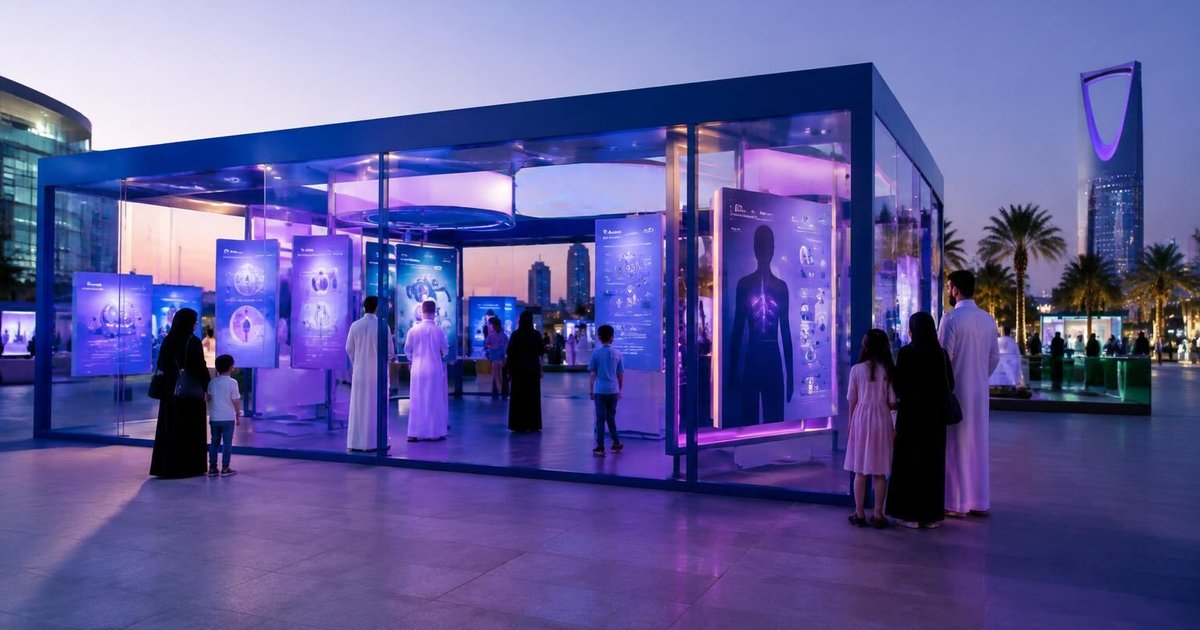
For this reason, a patient-education kiosk and an HCP event should not share a casually combined lead database. Separate flows by purpose. Collect only what is necessary, limit permissions, apply retention schedules and clarify the controller/processor roles before vendors receive data. Dashboard design should favour aggregated insights when personal-level data is not needed.
Connect the experience to the next 30 days?
Event measurement is most useful when a follow-up workflow begins before the lights go on. Assign owners to speaker-requested scientific materials, post-event surveys, unresolved delegate questions, approved resource distribution and reporting. A sensible cadence is to capture immediate operational incidents on the event day, consolidate data soon afterward, review legitimate follow-up completion over the following weeks and then conduct a retrospective with the stakeholders. These are planning practices, not a mandatory regulatory timetable.
Ask what the team learned about the audience. Were the scientific topics relevant? Did the registration journey prevent eligible attendance? Did the hall layout impede discussion? Which parts of the agenda invited questions? Which channel did participants genuinely choose for continuing contact? An event should produce a better next event, not only a PDF of photographs.
A useful procurement question: what will success evidence look like?
When selecting a medical event management company in Saudi Arabia, request a sample KPI dictionary, anonymized report format, content-approval workflow and post-event debrief method. Evaluate whether the partner can coordinate stage production, venue logistics, scientific content review and engagement tracking without confusing these disciplines. For a multisite programme covering Riyadh, Jeddah and the Eastern Province, insist on consistent definitions across locations so results can be interpreted fairly.
Spectra Solutions MEA connects event strategy, production, experience design and optimisation for healthcare clients. Its events capability covers congresses, scientific symposia, advisory boards, product launches and hybrid engagement. The approach is most valuable when the agency and brand team agree on the purpose before investing in the physical format.
A pre-event scorecard you can use?
Before final budget approval, record one sentence for each: the audience to be reached; the need being addressed; scientific versus promotional classification; approved content and review owner; three primary KPIs; data sources; consent and privacy approach; accessibility requirements; follow-up ownership; reporting timing; and a list of outcomes that cannot be attributed to the event. Keep the scorecard short enough to be used during actual planning.
Frequently asked questions?
What is the best KPI for a pharma symposium in Saudi Arabia? There is no universal KPI. For an independent scientific meeting, educational relevance, balanced content, qualified participation and appropriately measured learning may be more suitable than sales-related metrics.
Can a congress booth prove return on investment? It can document cost, relevant engagement and follow-up. A defensible financial ROI requires attributable incremental financial outcomes, which are often difficult to isolate from other activities.
Should we collect every visitor's contact details? No. Collect data needed for defined, lawful purposes, use appropriate consent where required and separate audience engagement from unsolicited marketing.
How do we compare events in Riyadh and Jeddah? Use identical metric definitions and account for differences in event format, audience composition, venue, agenda and recruitment method rather than ranking purely by attendance.
How can we start? Begin with the objective, regulatory classification and KPI dictionary; then design the experience to support them.
The most effective pharmaceutical event is not necessarily the loudest one. It is the one that delivers an appropriate experience and leaves decision-makers with credible evidence of what happened, what was learned and what should happen next.
Explore Spectra's healthcare event and experience services: Explore Spectra services
Contact: service@spectra-mea.com
English references
Have a question we did not cover?
Talk to our team about HCP engagement, experiential and digital strategy across the GCC.
Ask our team