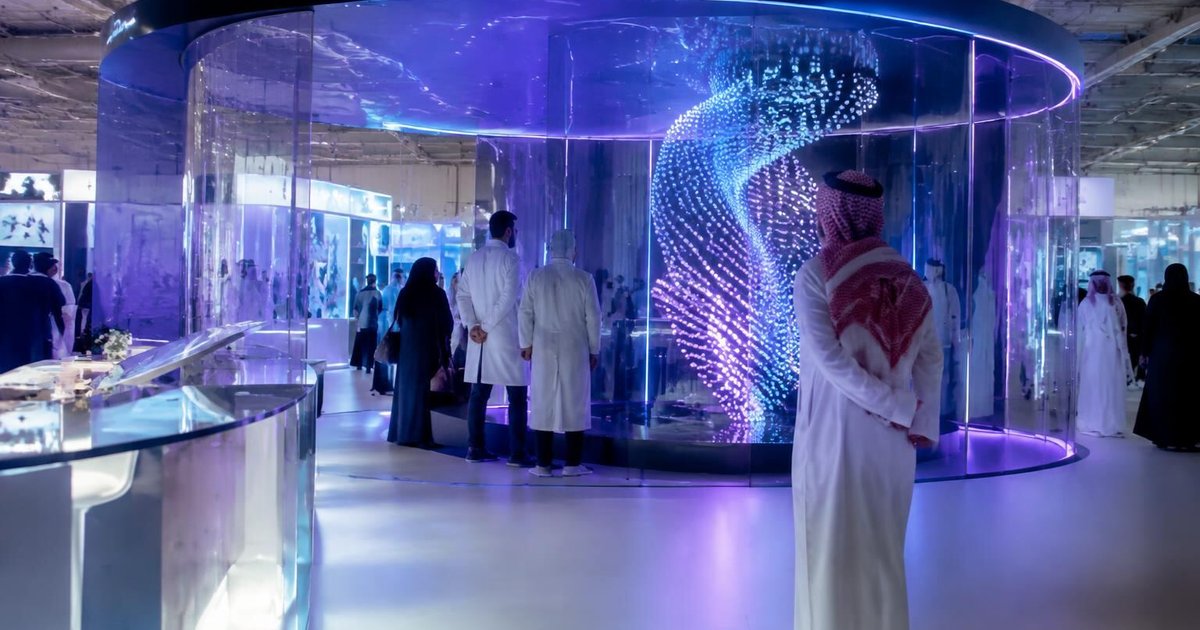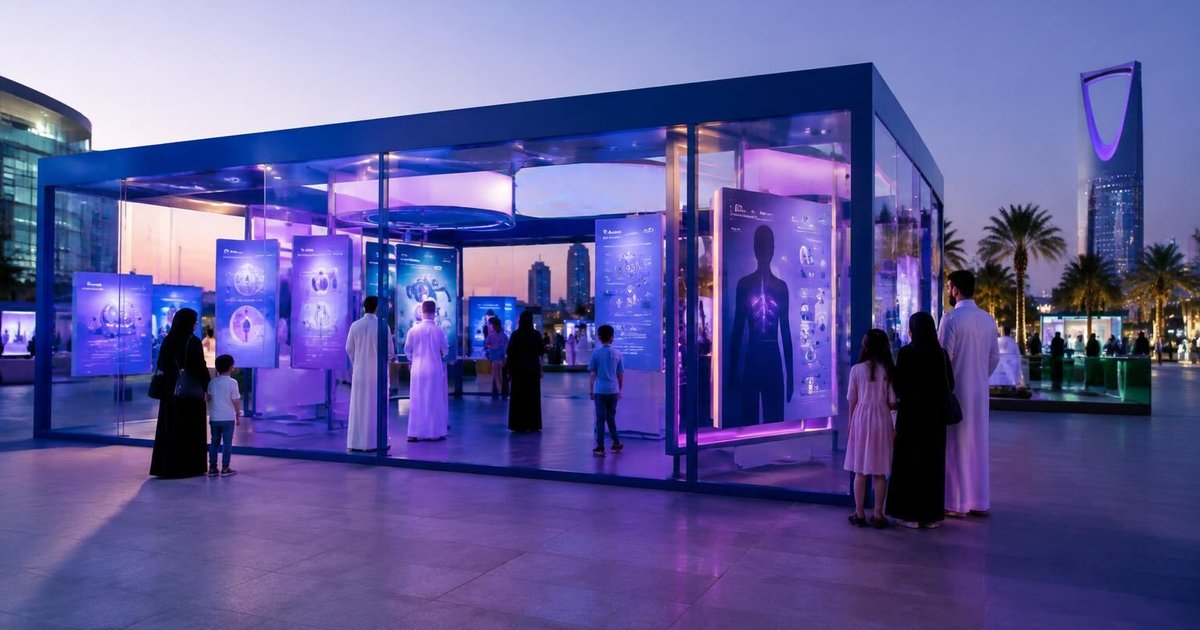
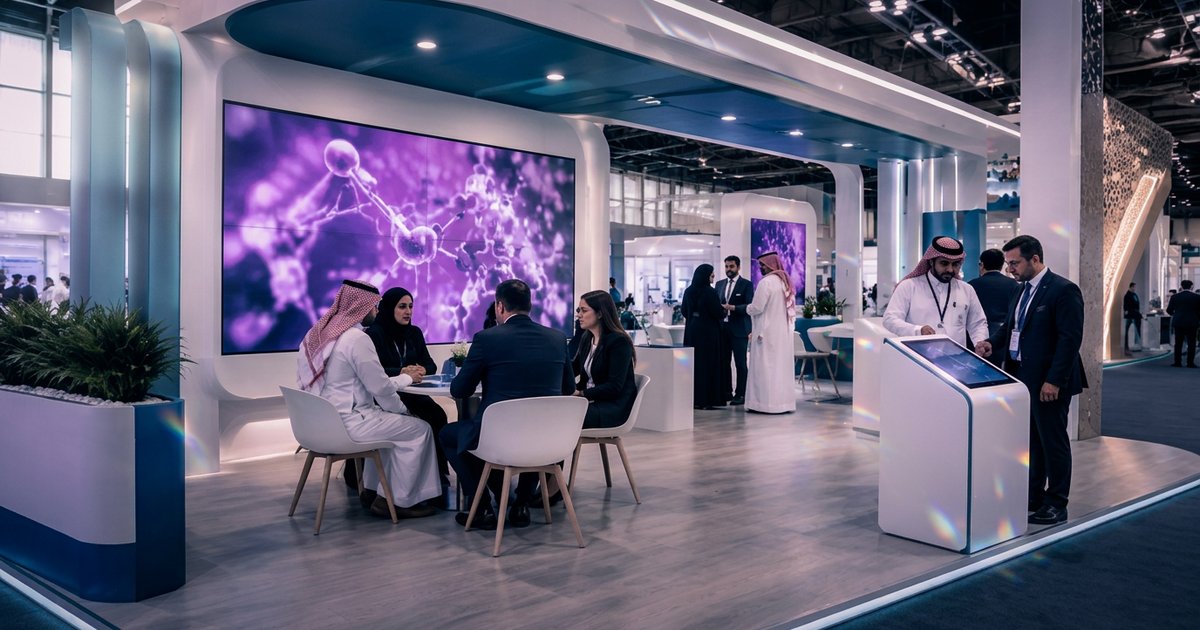
A pharmaceutical exhibition stand can be visually impressive yet almost invisible to the healthcare professionals it is intended to serve. Visitors admire the lighting, collect a brochure and move on. Meanwhile, the medical team is trying to have serious scientific conversations in a noisy corridor, the interactive display is difficult to navigate, and follow-up requests are scattered across several spreadsheets. These are not necessarily failures of fabrication. They are failures to design the HCP journey before designing the structure.
For companies researching medical congress booth design and build in Saudi Arabia, the priority should be a space that aligns approved messages, audience needs, staffing and production. Riyadh and Jeddah host a range of healthcare meetings, but no two congresses share exactly the same audience or exhibition constraints. A booth that suits a specialist scientific meeting may not suit a high-footfall multidisciplinary exhibition. The right starting point is a brief grounded in the event—not a recycled 3D render.
Visual summary
See the whole article at a glance
Follow the journey, then explore how the key ideas connect.
Article journey
Topic mind map
- Start with the professional audience, not the floor plan
- The creative test: can the visitor understand the purpose in seconds
- Build the right handover between creative and production
+3 more topics in the full guide
Questions answered (9)
- 1. Start with the professional audience, not the floor plan?
- 2. Give each zone one job?
- 3. The creative test: can the visitor understand the purpose in seconds?
- 4. Treat SFDA review as a design input?
- 5. Build the right handover between creative and production?
- 6. Staff behaviour is part of the experience design?
- 7. Measure meaningful interaction, not inflated footfall?
- 8. A six-step congress preparation process?
- 9. Frequently asked questions?
Start with the professional audience, not the floor plan?
Identify the relevant specialties, level of familiarity with the therapy area or medical device, information needs and probable interaction time. A clinical specialist may look for evidence and practical clinical discussion; a hospital procurement or biomedical engineering visitor may need technical and operational information. When different audiences use the same stand, the content pathway should make their next step apparent without imposing an identical sales pitch.
Map a visitor journey in simple language: notice the purpose; understand whether the space is relevant; choose an interaction; access the appropriate approved information; speak to the right team member; and, where requested and permitted, receive relevant follow-up. Only after this map is approved should the design team translate it into zones, signage, screens and equipment.
Give each zone one job?
A practical congress stand often requires four functional experiences. An orientation zone uses a short, readable statement to explain why the stand matters. A scientific content zone provides appropriately approved evidence or device information. A discussion zone supports focused conversations with the relevant experts. A follow-up zone helps visitors request further materials or contact through a compliant, documented process.
Not every booth needs four physical rooms. Small spaces can provide all four functions through careful sequencing, sightlines and movable furniture. The important distinction is between a space planned for the audience and one filled with features simply because the technology is available.
For a medical device demonstration, consider sightlines to the equipment, safe handling, disinfecting procedures, electrical capacity and staffing. For an HCP scientific exhibit, consider screen readability, noise control and a clear route to medical information. For patient-facing displays, additional content and audience restrictions may apply: an HCP-only promotional area must not accidentally become consumer advertising.
The creative test: can the visitor understand the purpose in seconds?
Congress floors are visually crowded. Competing signs, oversized slogans and decorative motion can weaken comprehension. A strong creative hierarchy gives visitors one clear promise at distance, a second level of context as they approach, and deeper scientific or technical information only when they choose to explore it. Typography, contrast and layout therefore perform a functional task.
Interactive HCP engagement booth ideas should not be measured by novelty alone. A touchscreen could compare approved device configurations; a physical demonstration could illustrate a workflow; a short facilitated conversation could clarify an evidence gap. Each interaction needs one learning or engagement objective and an expected duration. If a digital feature offers no meaningful improvement over a well-designed poster, reconsider it.
Where bilingual material is needed, Arabic should be deliberately typeset and reviewed rather than squeezed into a design built exclusively for English. Check right-to-left flow, scientific terminology and the accuracy of medical translations. Regulatory and medical approval applies to the final displayed language versions, not merely the source copy.
Treat SFDA review as a design input?
The Saudi Food and Drug Authority's promotional practices code requires pharmaceutical advertising materials to align with SFDA-approved claims and sets requirements for HCP-facing promotional information. Digital and electronic promotional media are not exempt from the relevant rules. That means booth screens, QR destinations, interactive applications and downloadable handouts require governance appropriate to their purpose.
Before production, classify each surface or digital experience: scientific education, promotional communication, company information, technical demonstration or other approved content. Check audience access, content approval status, mandatory safety or prescribing information where applicable, and the process for removing outdated material. The sponsor's medical, regulatory and compliance teams should decide how current rules apply to the particular product and event.
Do not use the event environment to imply unapproved benefits, bypass access controls or distribute misleading comparisons. When educational CPD activities are involved, respect their separation from promotional content and the SCFHS standards governing scientific independence. A premium stand can be persuasive through clarity and service without blurring ethical boundaries.
Build the right handover between creative and production?
One frequent operational weakness is approving a render without testing the real production conditions. Request a technical package including dimensions, material specifications, structural requirements, screen and lighting placements, power needs, accessibility, equipment handling, network requirements, installation timetable and emergency procedures. Confirm organizer restrictions and venue rules directly; they vary by event.
Insist on legibility reviews at actual viewing distances. Rehearse the most important interactive sequences before dispatch. Check that offline or fallback content is available for unreliable connectivity. Protect screens from glare, and design a quiet place for confidential professional conversations when the programme requires one. Sustainable design choices may include reusable structures, adaptable graphics and reasonable material planning; evaluate them against venue and budget constraints rather than treating sustainability as a decorative claim.
Staff behaviour is part of the experience design?
No amount of spatial design compensates for poorly briefed staff. Define who welcomes visitors, who delivers approved technical demonstrations, who handles scientific questions, and who records permitted requests. Prepare a short conversation guide: respectful opening, audience qualification, active listening, appropriate content route, and a clear close. Train staff on how to respond to off-label questions and safety information according to the sponsor's established procedures rather than improvise.
For HCP engagement, a visitor should be able to choose a relevant conversation instead of moving through a forced sequence. Staff need to know when a discussion belongs with medical affairs rather than a promotional representative. Accessibility and courtesy matter too: avoid queues that block aisles or content that demands lengthy participation from someone who has only a few minutes.
Measure meaningful interaction, not inflated footfall?
Use distinct metrics: total legitimate traffic estimates, unique qualified HCP conversations where appropriate, completed educational interactions, requests for approved information, follow-up completion and visitor feedback. Do not count the same person several times simply because they passed different sensors. Agree on the criteria for a 'meaningful conversation' before the congress. For instance, a substantial, documented discussion with the intended audience may be more informative than a screen touch.
Calculate costs against the right denominator. Cost per meaningful engagement can help compare future booth configurations when definitions remain stable. Compare performance against objectives, audience fit, event format and location. Do not claim improved prescribing or patient outcomes from exhibition engagement without a suitable evidence base.
Any contact collection must follow a specific lawful purpose and privacy controls. The Saudi PDPL framework includes safeguards for direct marketing and particularly sensitive personal information. Avoid transferring participant details into multiple uncontrolled spreadsheets or treating badge scans as blanket marketing permission.
A six-step congress preparation process?
First, confirm the congress purpose and expected professional audience. Second, classify the scientific, technical and promotional content and obtain the necessary reviews. Third, approve a visitor journey and zone architecture before selecting visual treatments. Fourth, validate fabrication, equipment and event logistics. Fifth, train booth staff through real scenarios and check the data-capture process. Sixth, evaluate the experience promptly and document improvements for the next meeting.
For procurement, ask an agency for more than attractive portfolio images. Request experience mapping, medical content governance, detailed production documentation, accessibility review, bilingual copy quality assurance, an incident plan and sample reporting. This is how a pharmaceutical exhibition stand design in Riyadh becomes a repeatable engagement programme rather than a one-off construction project.
Spectra Solutions MEA's exhibition booth service combines concept and 3D design, fabrication, interactive HCP engagement and on-site activation for pharmaceutical and medical device clients. The value of that combination is continuity: the intended conversation is reflected in the floor plan, the content, the staff briefing and the follow-up method.
Frequently asked questions?
How much should we spend on a medical booth? There is no reliable universal figure. Size, venue rules, fabrication complexity, reuse strategy, audiovisual equipment and staffing materially change cost. Request an itemised proposal linked to objectives.
Are interactive screens essential? No. Use them when they make approved information easier to understand or a technical workflow easier to demonstrate.
Can we use the same congress stand in Jeddah and Riyadh? Sometimes, but confirm space dimensions, organizer requirements, visitor mix, logistics and reusability before assuming a direct transfer.
Do medical congress screens need compliance review? Product-related promotional content and associated digital materials must be assessed against relevant SFDA rules and internal approval processes.
What is a qualified HCP interaction? It is an internally defined, lawful measure of engagement with the intended professional audience; define it clearly and consistently before the event.
The most useful congress stand is the one that gives the right visitor a reason to stop, a clear way to learn and an appropriate reason to continue the conversation.
Discuss medical congress booth design in Saudi Arabia: Explore Spectra services
Contact: service@spectra-mea.com
English references
Have a question we did not cover?
Talk to our team about HCP engagement, experiential and digital strategy across the GCC.
Ask our team