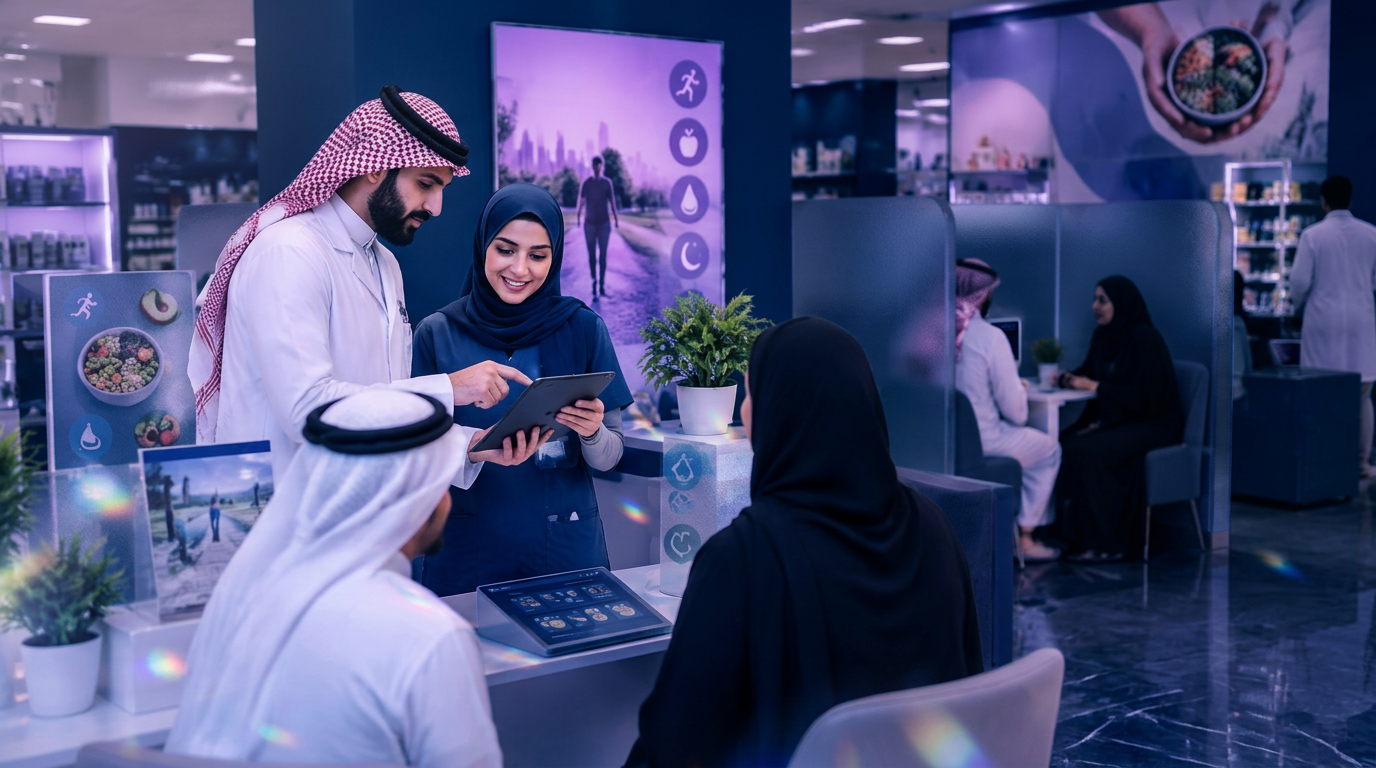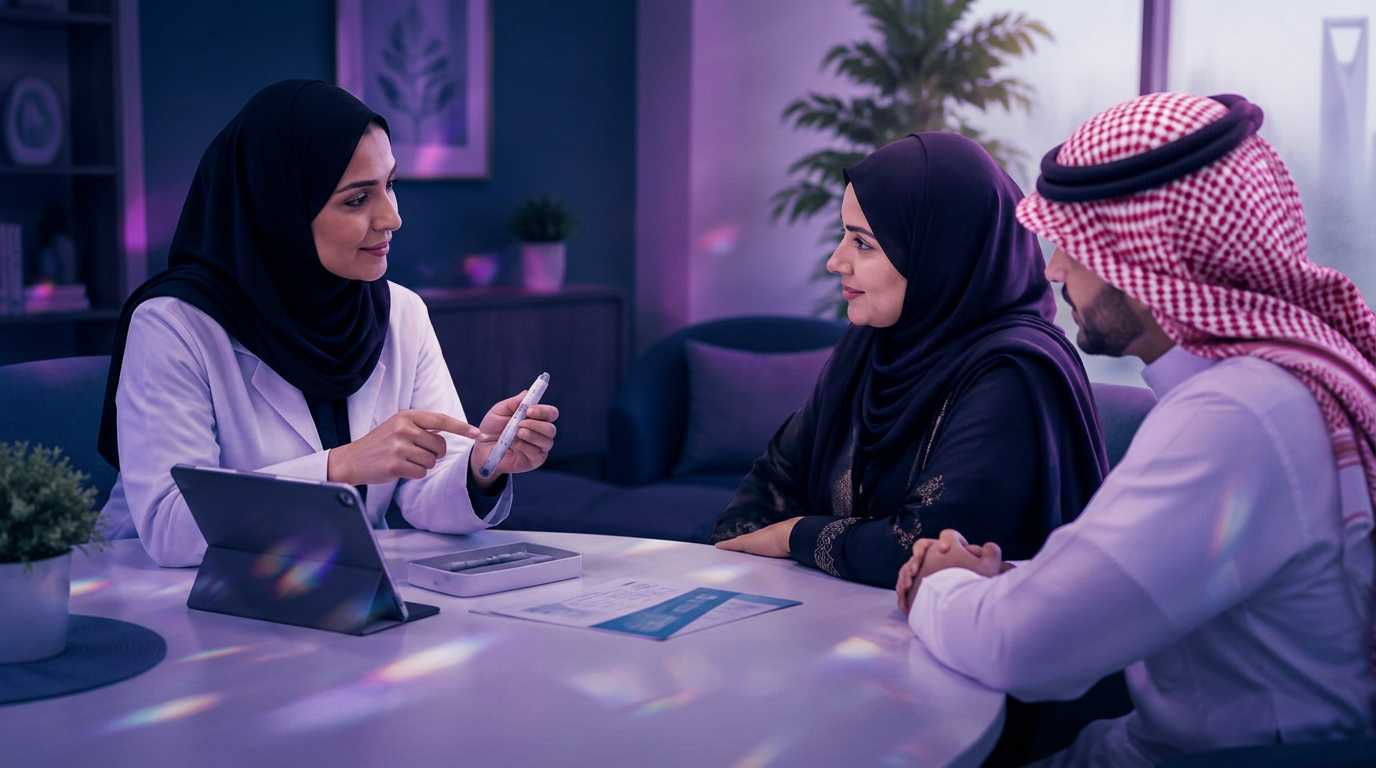

Saudi Arabia's healthcare sector is mid-transformation. With Vision 2030 reshaping hospital infrastructure, expanding the private sector's footprint, and elevating clinical standards nationwide, pharmaceutical and medtech brands face a defining challenge: reaching healthcare professionals in ways that are relevant, compliant, and measurably effective.
Traditional field force visits alone are no longer enough. Today's KSA-based HCPs — across Riyadh's new tertiary centers, Jeddah's expanding private hospital groups, and the Eastern Province's industrial health clusters — expect value-led interactions, not volume-driven calls. Here is what actually works in 2025.
Visual summary
See the whole article at a glance
Follow the journey, then explore how the key ideas connect.
Article journey
Topic mind map
Questions answered (6)
1. Insight-Led Medical Education, Not Sales Monologues?
The most effective HCP engagement in KSA today starts with a clinical question, not a product message. Brands that invest in locally relevant medical education — real-world evidence from GCC patient populations, Saudi epidemiology data, and disease burden statistics aligned with Vision 2030 health priorities — consistently outperform those pushing global messaging verbatim.
Formats that resonate include:
- CME-accredited roundtables at hospital level (3–8 HCPs), facilitated by a credible medical affairs team
- Luncheon symposia at key medical centers in Riyadh (King Faisal Specialist Hospital, King Abdullah Medical City) and Jeddah (Saudi German Hospital, Dr. Sulaiman Al Habib Group)
- Patient case discussions that allow physicians to bring real diagnostic or therapeutic challenges to a peer-facilitated session
The key differentiator: content that acknowledges the KSA clinical reality — including formulary restrictions, national treatment guidelines from the Saudi Health Council, and the specific patient demographics seen in public vs. private settings.
2. Digital Detailing Done Right?
Remote and hybrid HCP engagement gained permanent ground post-2020, but execution quality in KSA varies enormously. The brands succeeding with digital detailing share three features:
Short, modular content. KSA-based specialists — particularly in high-demand fields like oncology, endocrinology, and rheumatology — have narrow engagement windows. A 7-minute interactive visual aid outperforms a 25-slide deck.
Arabic language optionality. While most senior KSA HCPs read medical literature in English, conversational and educational content in Arabic signals cultural respect and dramatically improves recall. Bilingual digital details — English clinical data, Arabic support materials — are the current best practice.
CRM-integrated scheduling. Spontaneous e-detailing rarely converts in KSA. The brands seeing results schedule digital interactions through their MSL or field medical teams with a confirmed agenda sent 48 hours ahead.
Compliance note: All digital promotional content must meet SFDA promotional materials guidelines. Unbranded disease education distributed digitally falls under different review pathways than branded promotion — brands should confirm classification with their regulatory affairs teams before launch.
3. Congress and Event Activation as an Engagement Multiplier?
Saudi Arabia's medical congress calendar has expanded significantly. ESICM Saudi Chapter meetings, the Saudi Thoracic Society annual congress, the Saudi Oncology Society event, and the rapidly growing Saudi Medical Congress (SMC) each draw hundreds to thousands of HCPs. These are not just awareness moments — they are engagement infrastructure.
The brands maximizing congress ROI in KSA deploy a layered activation model:
- Pre-congress: Identify target HCPs attending, schedule satellite symposia or roundtables, prepare localized abstracts for poster discussions
- On-site: Booth experiences designed around data and dialogue, not brochures. Interactive product demonstration zones, digital patient journey kiosks, and invitation-only advisory board sessions with 8–12 KOLs
- Post-congress: Follow-up within 72 hours with personalized summaries, referenced materials, and next-step meeting requests
The best-performing congress booths in 2025 are experiential, not transactional. HCPs spend meaningful time in spaces that offer something genuinely useful — a clinical decision support tool, a rare disease screening algorithm, an accredited CME session built around congress themes.
4. KOL Strategy: Quality Over Quantity?
Saudi Arabia's medical KOL landscape is concentrated but influential. In many therapeutic areas, 10–15 key opinion leaders drive peer behavior across the Kingdom. Mapping these individuals — by institution, specialty, publication record, and professional network — is a prerequisite for effective engagement.
What works in KSA KOL engagement:
- Co-authorship and advisory roles on regionally relevant research projects
- Speaker bureau development with structured training on data presentation and SFDA promotional compliance
- National steering committee involvement in disease management guideline development
What does not work: transactional relationships that offer speaker fees without genuine scientific collaboration. KSA's medical culture values respect, intellectual substance, and long-term relationship investment. KOLs who sense they are being used as distribution channels disengage quickly.
5. SFDA Compliance as a Competitive Advantage?
Brands that treat SFDA promotional compliance as a burden miss a strategic opportunity. The compliance framework — including the requirements for SFDA review of promotional materials, restrictions on off-label promotion, and the guidelines on HCP hospitality under the Anti-Bribery Law — creates a level playing field. Brands that build fast, rigorous internal review processes can move promotional materials to market faster than competitors stuck in ad hoc approval workflows.
Best practices in 2025:
- Dedicated medical-regulatory-marketing review committees meeting weekly
- Pre-approved modular content libraries reducing individual review cycles
- Digital MLR (medical, legal, regulatory) platforms enabling remote review and audit trails
The Spectra Perspective?
At Spectra Solutions MEA, we design HCP engagement programs that connect clinical credibility with experiential excellence. Whether you are launching a new molecule in KSA, expanding an established brand's market share, or building a KOL advisory network from scratch, our teams bring both the market knowledge and the operational infrastructure to execute at the standard your brand deserves.
Ready to rethink your HCP engagement strategy in KSA? Contact our team at service@spectra-mea.com to explore how we can support your next program.
Have a question we did not cover?
Talk to our team about HCP engagement, experiential and digital strategy across the GCC.
Ask our team