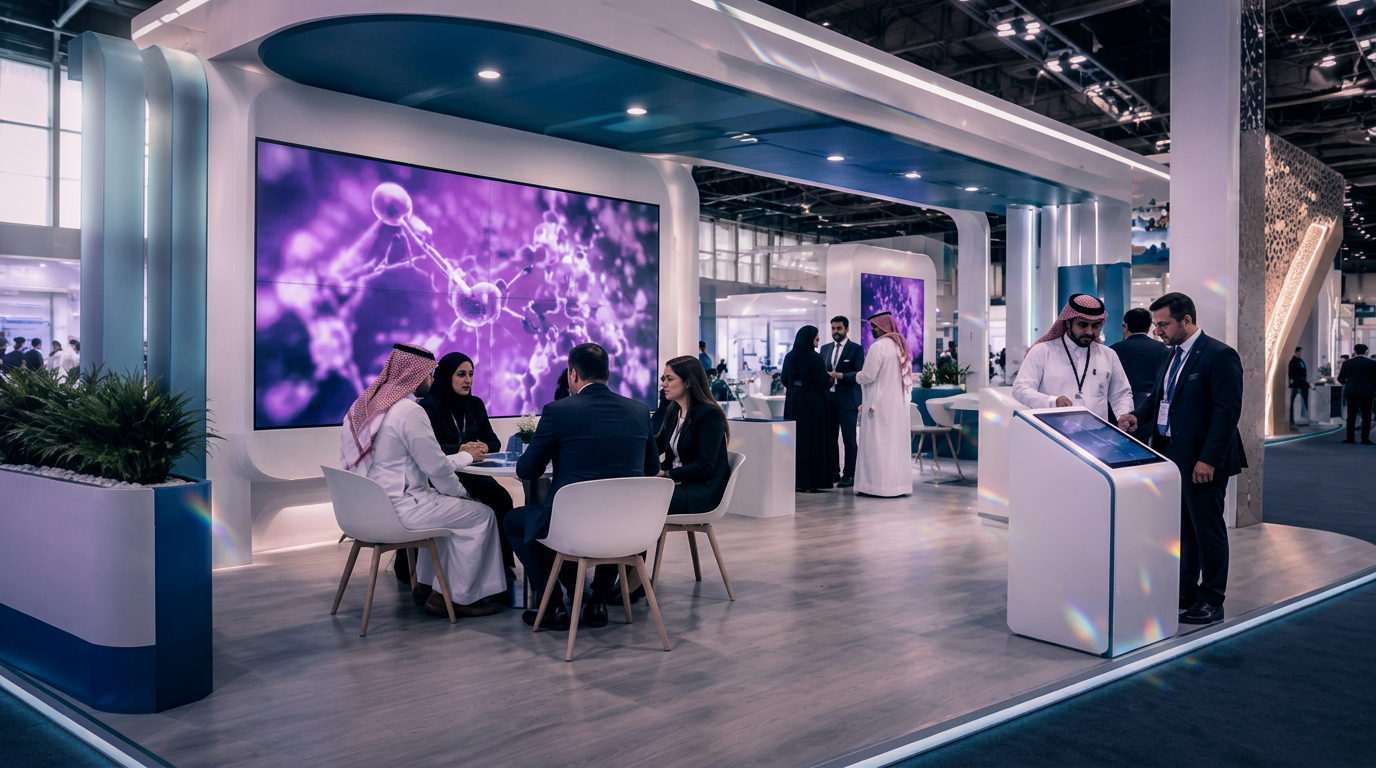

The traditional pharma rep visit — a 4-minute slot in a crowded clinic, a printed detail aid, a branded pen — is no longer the primary channel through which healthcare professionals in the GCC form clinical opinions. Saudi Arabia and the UAE have undergone a structural shift in how HCPs discover, evaluate, and adopt new therapies, and brands that have not updated their engagement model are leaving meaningful scientific conversations on the table.
This article explores what omnichannel HCP engagement actually means in the GCC context, why it requires a different architecture than Western markets, and how pharma and medtech brands can build a strategy that is both effective and compliant.
Visual summary
See the whole article at a glance
Follow the journey, then explore how the key ideas connect.
Article journey
Topic mind map
Questions answered (4)
What Omnichannel Really Means in GCC Healthcare?
Omnichannel HCP engagement is frequently misunderstood as "being present on multiple platforms." It is not. True omnichannel means that every touchpoint a physician experiences — a rep visit, a medical education webinar, a congress symposium, an approved email, a digital platform — is informed by the same data layer and delivers a consistent, personalized scientific narrative across the entire engagement journey.
In Saudi Arabia, the HCP population is one of the most digitally engaged in the MENA region. A 2024 survey of KSA-based physicians found that over 74% regularly use medical information platforms in their clinical decision-making, and more than half have shifted their preference away from in-person rep visits toward digital-first interactions for routine product information. In the UAE, particularly in Abu Dhabi and Dubai, the physician landscape is highly multinational — requiring communication strategies that work across Arabic, English, and South Asian linguistic preferences.
For pharma teams, this creates both complexity and opportunity.
The Four Pillars of Effective Omnichannel HCP Engagement in the GCC?
1. Data-Driven HCP Segmentation
Effective omnichannel begins with knowing your prescriber universe at a granular level. In the GCC, this goes beyond specialty and hospital affiliation. Key segmentation variables include institutional context (MOH hospitals, private group hospitals, or specialized centres of excellence each operate under different procurement and formulary processes), digital engagement preference, and therapeutic area depth.
CRM platforms used in the GCC must be configured to capture these nuances. Veeva CRM remains the dominant system, though a growing number of regional affiliates are exploring hybrid setups that integrate approved email, digital asset management, and event attendance data into unified HCP profiles.
2. Medical Education as the Engagement Anchor
Across KSA and the UAE, HCPs consistently cite medical education as their primary reason for engaging with pharmaceutical brands. A well-designed medical education calendar — aligned with national therapeutic area awareness periods, local congresses (KFMC Oncology Forum, Abu Dhabi Global Healthcare Week, Saudi Diabetes Society Annual Meeting), and global congresses with GCC HCP attendance — gives the field force a structured reason to engage that HCPs genuinely value.
Virtual and hybrid formats have become permanent fixtures. Brands that invested in quality webinar production, bilingual (Arabic/English) CME content, and digital scientific platforms built audience reach that has compounded year on year.
3. Compliant Digital Channels
Omnichannel execution in KSA must be conducted within the regulatory framework set by the Saudi Food and Drug Authority (SFDA). Key compliance considerations include: all digital content distributed to HCPs must carry the same medical, legal, and regulatory (MLR) approval as printed materials; the Personal Data Protection Law (PDPL) governs how HCP personal data is collected and used for engagement purposes; and SFDA guidelines on promotional communications apply equally to digital channels.
In the UAE, MOHAP's promotional guidelines and the Dubai Healthcare City Authority (DHCA) framework add further layers for brands operating in free zone environments.
4. Integrated Field and Digital Orchestration
The most common failure mode in GCC omnichannel programs is the siloed execution model — where the digital team and the field team operate independently, often with different KPIs and no shared data view of the HCP. A physician who attended a brand webinar three days ago and then receives a rep visit covering the exact same content experiences that as redundancy, not reinforcement.
Effective orchestration means Field Medical Advisors and MSLs receive pre-call alerts on digital engagement activity, rep visits are sequenced to deepen conversations initiated in webinars, follow-up materials are triggered by engagement data, and congress interactions are linked to pre-congress digital touchpoints.
Measuring What Matters?
Standard HCP engagement metrics were designed for single-channel models. Omnichannel programs require a more sophisticated measurement framework including engagement score per HCP, share of voice by channel, content consumption depth, and prescription linkage where data agreements allow.
In KSA, real-world prescribing data is becoming more accessible through the National Health Information Center (NHIC) and private hospital partnerships. Brands that establish data collaboration frameworks early will have a significant advantage in attribution modeling.
Building Your GCC Omnichannel Capability?
The pathway from traditional field-force model to integrated omnichannel follows a phased approach: Foundation (CRM hygiene, HCP data enrichment, digital channel testing), Integration (connecting digital engagement data into the CRM, piloting orchestrated sequences), and Optimization (applying engagement scoring, personalizing content at scale, embedding omnichannel KPIs into commercial incentive frameworks).
The brands succeeding in GCC HCP engagement today are those that treated this capability investment as a commercial priority three to five years ago. The brands that will lead in 2028 and beyond are making those investments now.
Spectra Solutions MEA works with pharmaceutical and medtech brands across KSA, UAE, and the broader GCC to design and execute HCP engagement programs that are scientifically credible, commercially effective, and fully compliant. To discuss how we can support your brand's engagement strategy, contact us at service@spectra-mea.com.
Have a question we did not cover?
Talk to our team about HCP engagement, experiential and digital strategy across the GCC.
Ask our team