Awareness changes how people think. Patient activation changes what they do next. For obesity, that next step is often the hardest: acknowledging a medical issue, booking an appointment and staying engaged with long-term care.
The ideas below help pharma, medtech and healthcare organisations design activations that guide people from curiosity to a conversation with a qualified clinician, without promoting any prescription product.
Visual summary
See the whole article at a glance
Follow the journey, then explore how the key ideas connect.
Article journey
Topic mind map
- Design around the barriers, not the brand
- The activation journey in four steps
- Metrics that show real activation
+10 more topics in the full guide
Questions answered (16)
- 1. Design around the barriers, not the brand?
- 2. Eight activation ideas with high patient value?
- 3. The activation journey in four steps?
- 4. Data, consent and privacy?
- 5. Metrics that show real activation?
- 6. How to choose the right setting?
- 7. Station-by-station design of an education journey?
- 8. The pharmacy programme operating model?
- 9. Screening tools: what to use and what to avoid?
- 10. A corporate metabolic-health day: sample run-of-show?
- 11. Training hosts and facilitators?
- 12. Follow-up that turns attendance into action?
- 13. Practical planning notes for the Gulf?
- 14. FAQs?
- 15. Bring your activation to life?
- 16. Sources and review notes?
Design around the barriers, not the brand?
Before choosing a format, name the barrier you want to remove:
- "I don't think this is medical." Needs education on obesity as a disease.
- "I'm embarrassed to ask." Needs private, respectful settings.
- "I don't know where to start." Needs a simple pathway and a named next step.
- "I tried before and it didn't last." Needs realistic, long-term framing and support.
Eight activation ideas with high patient value?
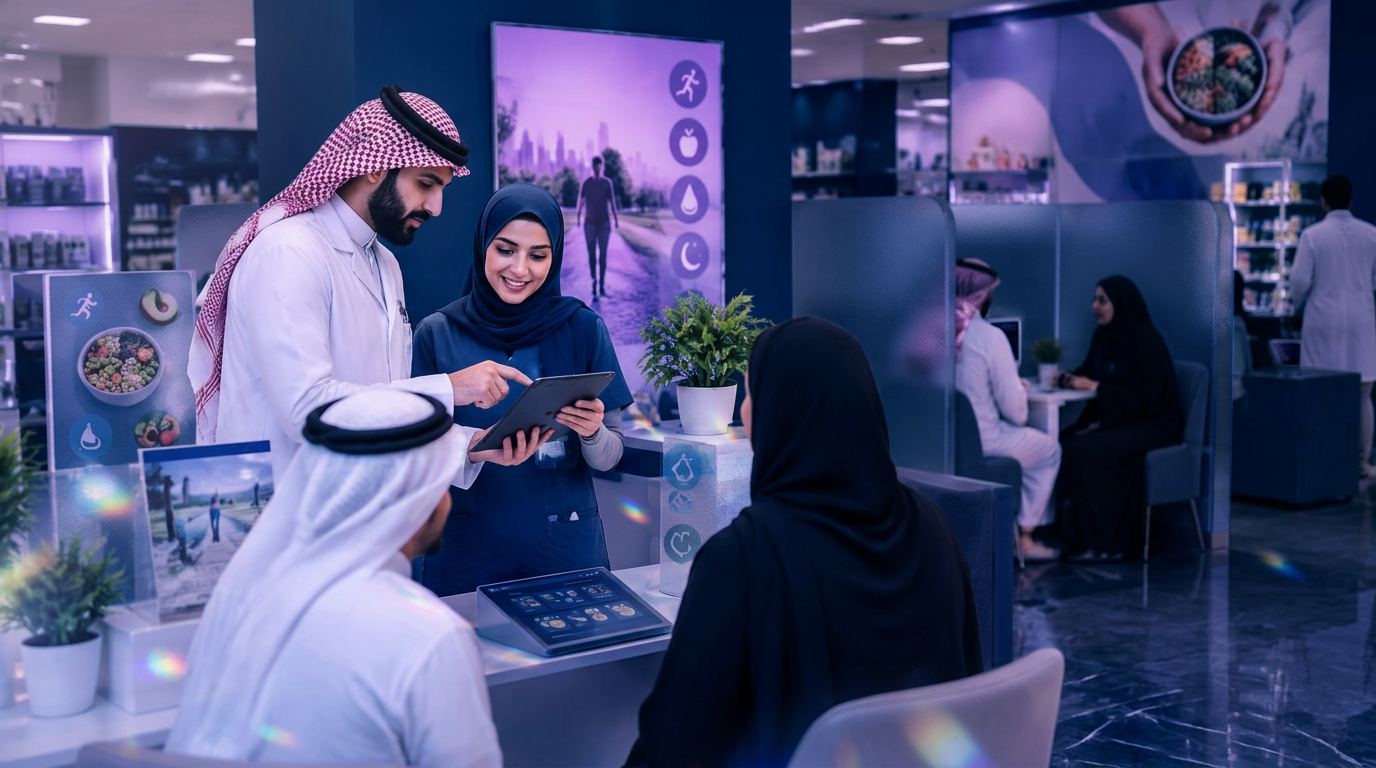
- Pharmacy health-check corner. Waist, blood pressure and a validated risk questionnaire, delivered by a licensed pharmacist, with a referral card to a physician.
- Corporate metabolic-health day. Short screenings, nutrition education and a physician Q&A at workplaces, with a clear confidentiality promise.
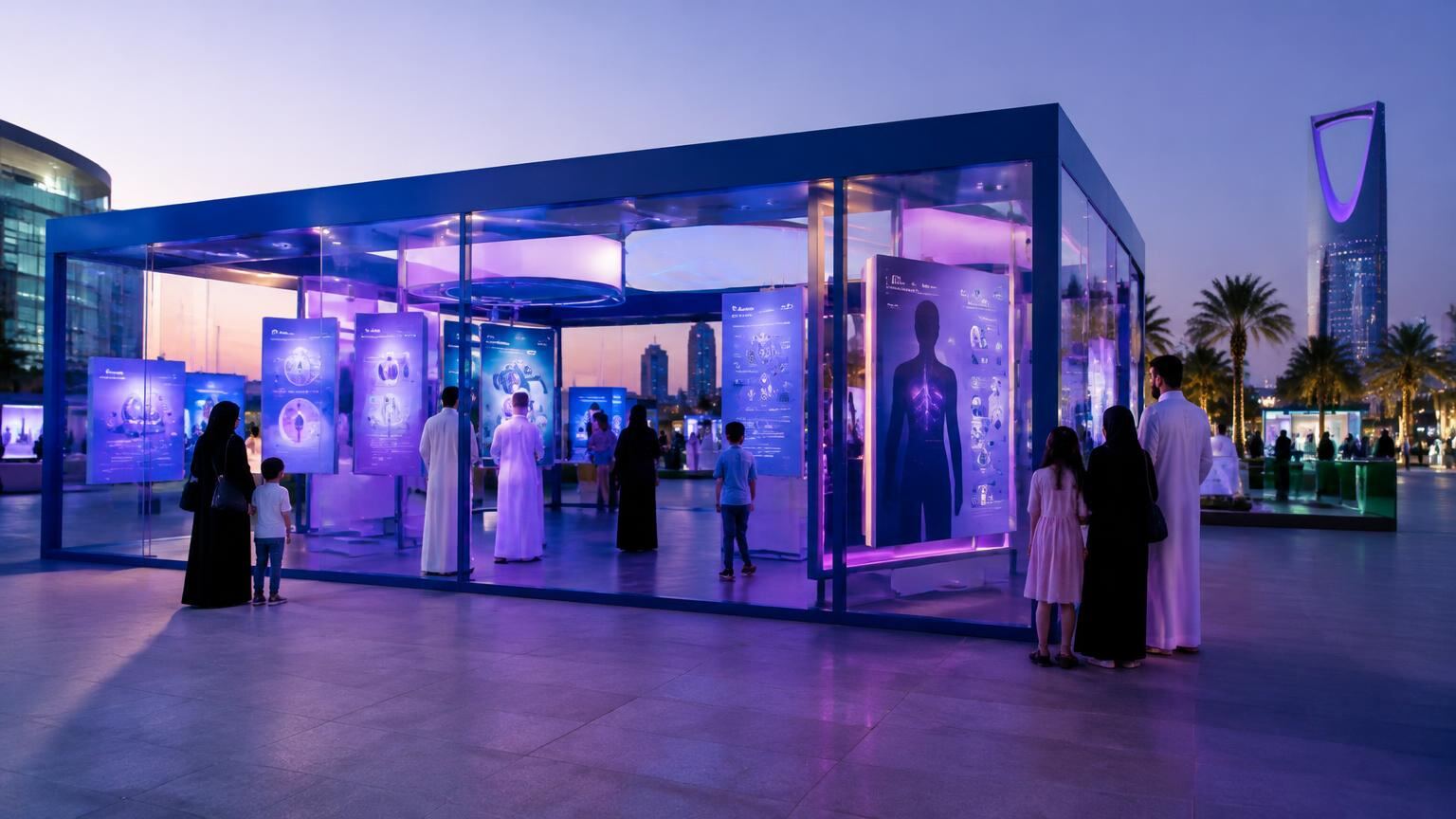
- Mall-based education journey. A five-station walkthrough covering what obesity is, why it is hard to manage alone, associated health risks, what a medical consultation involves and how to prepare for it.
- Hospital waiting-room programme. Brief video, printed doctor-conversation guides and a QR code to a bilingual self-assessment.
- Caregiver and family workshop. Teaches relatives how to support without blaming, and how to shop, cook and celebrate together.
- Women's and men's health sessions. Gender-appropriate spaces, hosts and times, particularly important in the Gulf.
- University and youth programme. Early habits, mental wellbeing and a stigma-free approach to body image.
- Peer-story evenings. Patients, with consent and clear editorial control, share their care journey with a moderator and a physician.
All formats should keep product promotion out of the room: no brand logos on screening materials, no discussion of specific prescription options by non-medical hosts and no incentives that encourage a prescription.
The activation journey in four steps?
| Step | Goal | Example touchpoint |
|---|---|---|
| Attract | Draw the right audience | Clear invitation in Arabic and English, trusted venue |
| Educate | Build understanding | Interactive stations, simple visuals |
| Assess | Personalise relevance | Validated questionnaire, pharmacist or nurse conversation |
| Refer | Create a next step | Appointment link, physician directory, helpline |
Data, consent and privacy?
Any screening collects sensitive information. Obtain explicit consent, collect the minimum necessary, store data securely and follow Saudi and UAE data-protection requirements. Make clear who will contact participants and why. Use licensed healthcare staff for any measurement or interpretation.
Metrics that show real activation?
Track participation by station, completion of the education journey, assessments completed, referral cards or appointment links used, follow-up consent and knowledge shift before and after. Where partner clinics share anonymised data, add booked consultations and diagnoses made.
How to choose the right setting?
Not every venue suits every objective. Score each option against the criteria that matter for your programme before committing budget.
| Setting | Trust level | Privacy | Reach | Best for |
|---|---|---|---|---|
| Community pharmacy | High | Medium to high with a private corner | Steady, local | Screening, counselling, referral |
| Hospital or clinic lobby | High | Medium | Patients already in care | Education, doctor-conversation guides |
| Corporate site | Medium to high | High with a booked room | Working adults | Metabolic-health days, workshops |
| Mall | Medium | Low unless designed carefully | Very high | Awareness, interactive education |
| University or youth venue | Medium | Medium | Younger audiences | Healthy-habit education, stigma reduction |
| Community or religious institution | High | Medium | Families | Family workshops, caregiver sessions |
Where privacy is low, design for it: use screened consultation spaces, appointment slots and discreet signage that invites people to a "health check" rather than a "weight check".
Station-by-station design of an education journey?
A five-station walkthrough takes a visitor about ten to fifteen minutes and works well in malls, hospitals and workplaces. Each station has one purpose and one memorable idea.
- Station one: "What is obesity?" A short visual explaining that obesity is a chronic disease influenced by biology, environment and behaviour. The takeaway: this is not only about willpower.
- Station two: "How appetite works." A simple interactive display showing how hormones and the brain regulate hunger and fullness. The takeaway: the body defends its weight.
- Station three: "Health beyond the scale." A card-based activity linking weight to sleep, joints, blood pressure, blood sugar and mood. The takeaway: small health improvements matter.
- Station four: "What a medical consultation looks like." A walkthrough of the questions a doctor may ask, the tests that may be requested and the range of care options discussed. The takeaway: the first visit is a conversation, not a judgement.
- Station five: "Your next step." A personal action card with space to write questions, a QR code to the self-assessment and options for booking an appointment. The takeaway: you leave with something to do.
Staff every station with a trained host who can answer questions and escalate anything clinical to a licensed professional on site.
The pharmacy programme operating model?
Pharmacies can be one of the most credible activation platforms, because pharmacists are accessible and trusted. A workable operating model includes:
- Pharmacist training on respectful communication, use of the screening questionnaire, referral criteria set by the medical team and handling of sensitive questions.
- A standard screening flow that takes ten minutes or less: welcome and consent, questionnaire, measurements by trained staff, brief conversation, referral card.
- A private consultation corner or booked slot system.
- Clear referral rules that tell pharmacists when to recommend a physician visit promptly.
- Simple data capture with consent, kept separate from any sales system.
- A follow-up message with an opt-in, so people who want a reminder to book a check-up can receive one.
The programme should never be used to steer patients toward a particular prescription product. Pharmacists remain independent healthcare professionals and the programme must protect that independence.
Screening tools: what to use and what to avoid?
Body mass index (BMI) is widely used but has limitations, particularly across different populations and body compositions. Many programmes combine BMI with waist circumference and a short risk questionnaire covering family history, sleep, activity, blood pressure and blood-sugar history. Thresholds and interpretation should be set and approved by your medical team, aligned with national guidance and the practice of local clinicians.
A responsible screening activity:
- Uses validated tools and trained, licensed staff
- Explains that results are not a diagnosis
- Offers private measurement
- Avoids announcing results aloud or displaying them publicly
- Provides a clear referral recommendation based on agreed criteria
A corporate metabolic-health day: sample run-of-show?
| Time | Activity | Owner |
|---|---|---|
| Before the day | Employee invitation, consent form, appointment booking | HR and agency |
| Opening | Short welcome from leadership and a clinician on why metabolic health matters | Physician speaker |
| Morning | Private screening slots with nurses or pharmacists | Healthcare staff |
| Midday | Interactive education stations and a dietitian Q&A | Dietitian and host team |
| Afternoon | Optional workshop on sleep, stress and activity | Faculty speaker |
| After the day | Personal results summary, referral information and optional follow-up messages | Programme team |
A confidentiality promise is essential: employers should not receive individual results, only anonymous summary participation data.
Training hosts and facilitators?
Hosts shape the experience more than any display. Invest in a short training that covers person-first language, how to respond when someone becomes emotional, what hosts may and may not say, how to escalate a clinical question and how to handle consent and data. Role-play the difficult moments, such as a participant who asks which medicine they should take. The correct response is always warm, clear and the same: "That is a great question for your doctor. Let me show you how to prepare for that conversation."
Follow-up that turns attendance into action?
Activation without follow-up is a missed opportunity. For participants who consent, plan a gentle sequence:
- Same day: A thank-you message with the doctor-conversation guide and self-assessment link.
- Day three: A short, clinician-reviewed explainer matching the topic they engaged with.
- Day ten: A reminder to book a check-up, with a simple booking link or phone number.
- Day thirty: An invitation to a family workshop or webinar.
Keep messages brief, in the participant's language and easy to opt out of.
Practical planning notes for the Gulf?
- Avoid placing outdoor activations in peak summer heat; choose indoor or shaded venues.
- Plan around Ramadan hours, school calendars and national holidays when attendance patterns change.
- Arrange gender-appropriate hosts, times and spaces and communicate these in the invitation.
- Provide Arabic and English materials, with accessibility options for people with visual or hearing needs.
- Secure venue approvals, health-authority permissions and insurance well ahead of dates, as requirements differ by country, emirate and venue.
FAQs?
Where is the best place to run an obesity screening activation in Saudi Arabia? Pharmacies, hospitals, workplaces and community centres work well, because they combine trust, footfall and access to qualified staff.
Can a company sponsor an obesity activation without promoting a drug? Yes, if it is framed as disease awareness, uses no brand identifiers and refers people to healthcare professionals. Confirm the plan with Regulatory and Legal.
How do you encourage people to attend a health event about weight? Offer privacy, gender-appropriate sessions, a health-first invitation and a clear takeaway, such as a doctor-conversation guide.
Bring your activation to life?
Talk to Spectra about patient activation programmes built for the GCC.
Sources and review notes?
- Saudi General Authority for Statistics: Health Determinants Statistics Publication 2023
- Saudi Ministry of Health: Obesity awareness
- WHO: Obesity and overweight
- Saudi clinical practice guideline for adult overweight and obesity
This article is for professional education and programme planning. It does not replace individual medical advice. Medical, Regulatory, Legal and native-language review is required before programme use.
Have a question we did not cover?
Talk to our team about HCP engagement, experiential and digital strategy across the GCC.
Ask our team