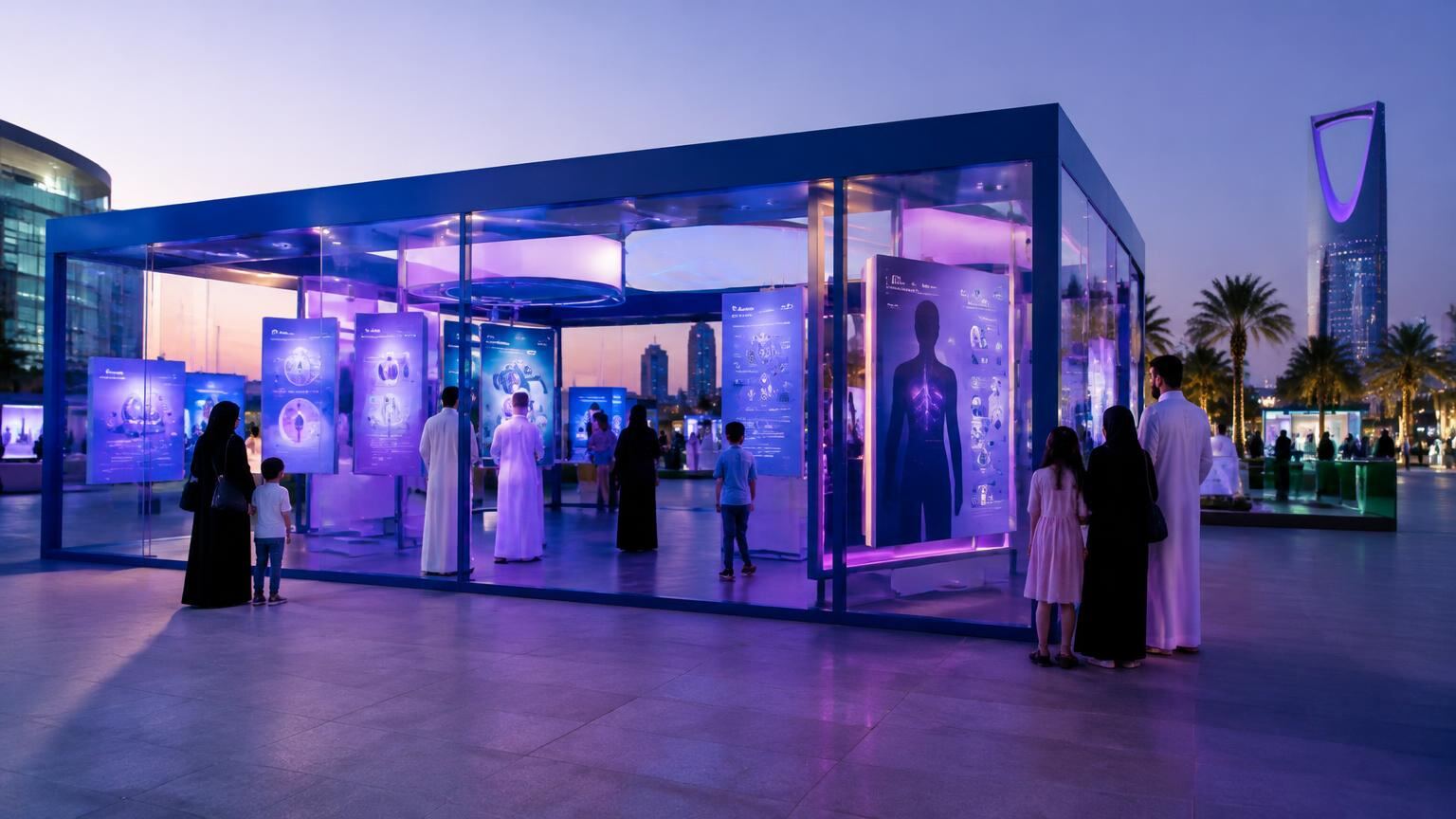
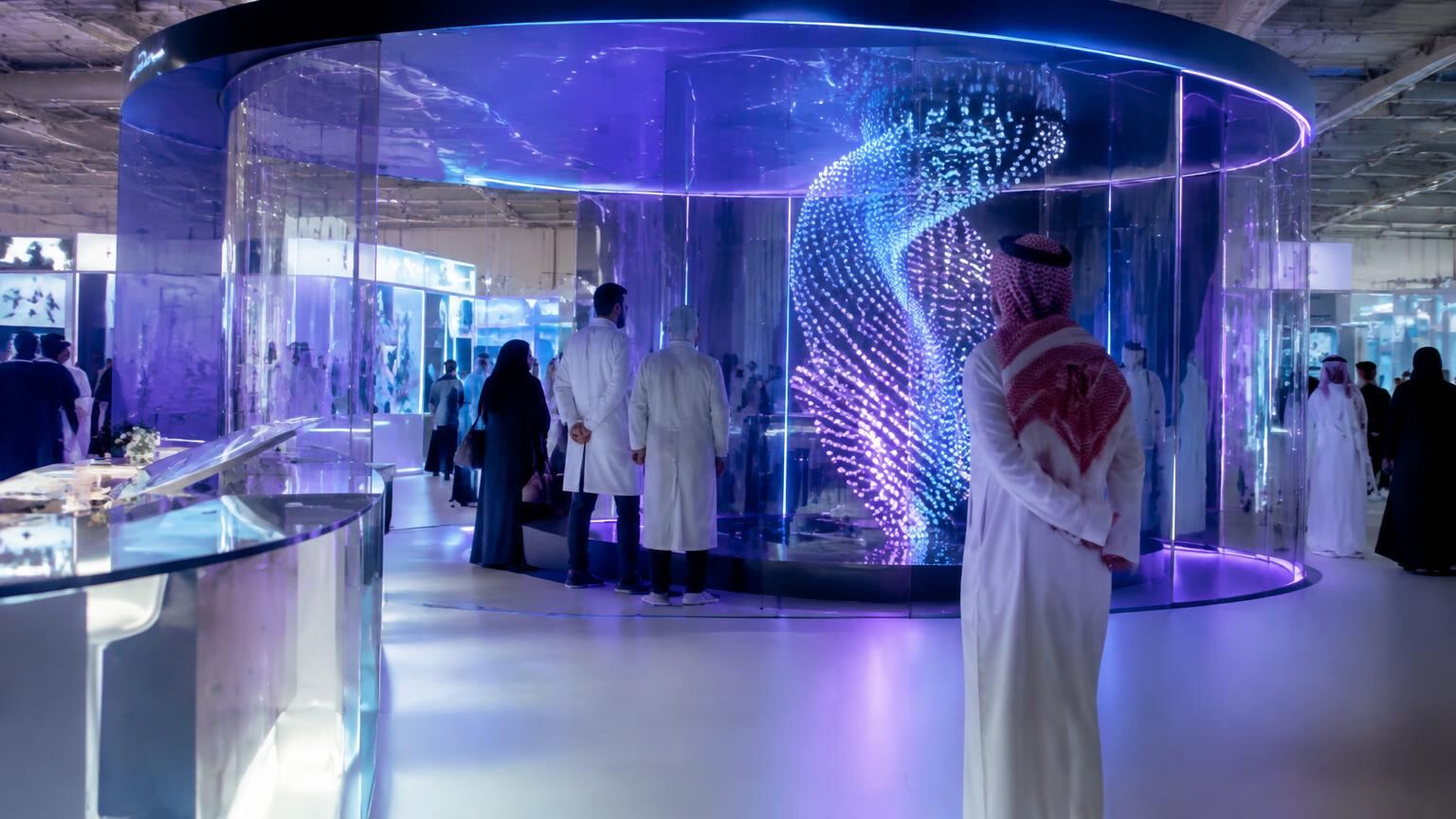
Experiential marketing is the practice of creating live, designed experiences that let an audience learn by doing rather than by reading. In healthcare, that might be a clinician handling a new device, a patient walking through how a condition works, or a multidisciplinary group testing a referral pathway on a table-sized map. When it is done well, an experience can explain in ten minutes what a brochure cannot explain in an hour.
This playbook sets out how pharma, medtech and healthcare organisations can plan and run healthcare activations in Saudi Arabia, the UAE and the wider GCC that are compliant, memorable and measurable.
Visual summary
See the whole article at a glance
Follow the journey, then explore how the key ideas connect.
Article journey
Topic mind map
- Why experiences work in healthcare
- A seven-step process for planning an activation
- Launch events: a sample run-of-show
+8 more topics in the full guide
Questions answered (14)
- 1. Why experiences work in healthcare?
- 2. The seven experience types and when to use each?
- 3. A seven-step process for planning an activation?
- 4. Design principles that make a difference?
- 5. Launch events: a sample run-of-show?
- 6. Immersive technology: when it helps and when it does not?
- 7. Experiences for patients: design with care?
- 8. Follow-up that turns an experience into results?
- 9. Measuring the return on experience?
- 10. Common mistakes?
- 11. Delivering this in Saudi Arabia?
- 12. FAQs?
- 13. Create your next experience with Spectra?
- 14. Sources and review notes?
Why experiences work in healthcare?
Four reasons explain why live experiences remain effective even in a digital age:
- Complex ideas need demonstration. Mechanisms of action, device technique and care pathways are easier to grasp when people can see, touch and try them.
- Trust is built face to face. In a region where relationships carry weight, a respectful in-person conversation can open doors that a message cannot.
- Attention is scarce. A well-designed space can hold a busy clinician's focus for several minutes in a hall with hundreds of competing stands.
- Memory follows emotion and action. People remember what they did and felt, which supports recall of the key message.
The seven experience types and when to use each?
| Experience | Audience | Objective | Example |
|---|---|---|---|
| Congress booth or satellite symposium | Specialists, primary care | Qualified scientific conversations | Guided case-discussion zones and a data-exploration wall |
| Product or service launch event | KOLs, institutions, media | Credibility and shared understanding | A scientific programme with a hands-on demonstration area |
| Hands-on training lab | Nurses, technicians, surgeons | Skill and confidence | Stations for device handling with a clinical specialist |
| Immersive education (AR, VR, mixed reality) | HCPs and patients | Explain mechanisms and anatomy | A guided visual journey inside the body or device |
| Roundtable or advisory dinner | KOLs, thought leaders | Insight and pathway design | A facilitated discussion with a shared output |
| Patient activation and education journey | Patients, caregivers | Understanding and referral | Interactive stations in a hospital lobby or mall |
| Corporate and community health day | Employees, families | Prevention and early detection | Screening, education and referral in a workplace |
A seven-step process for planning an activation?
Step 1: Define the behaviour you want to change. Write one sentence in the form: after this experience, [audience] will [do something observable]. For example: after this session, primary-care physicians will use the referral card in their next relevant consultation.
Step 2: Understand the audience and the setting. Who will attend, how long will they stay and what are they doing before and after? A congress hall and a hospital lobby demand very different designs.
Step 3: Design the journey. Plan the visitor path from attraction to welcome, engagement, conversion and follow-up. Limit each experience to one core idea and one primary action.
Step 4: Choose the format and technology. Pick technology that serves the conversation, such as touch-based data explorers, mixed-reality explainers, device stations or QR-based scheduling. Always include an offline fallback.
Step 5: Build compliance into the design. Separate promotional and scientific zones where your code requires it, pre-approve every asset and make content modular so approved material can be updated quickly.
Step 6: Prepare the people. Hosts, specialists and clinical staff shape the experience more than any display. Train them in the scientific content, language, escalation of medical questions and consent for data capture.
Step 7: Plan follow-up and measurement before the event. Agree how interest will be turned into action within days and which indicators will tell you whether the experience worked.
Design principles that make a difference?
- One big idea. Visitors should be able to explain your experience in a single sentence.
- Open and welcoming. Avoid barrier desks. Leave circulation space so the area never looks closed.
- Participation over display. If a screen can be replaced by a conversation, replace it.
- Private spaces for deeper discussion. Provide a quiet area for scientific exchange or patient questions.
- Culturally attuned details. Consider prayer times, hospitality, gender-appropriate arrangements and bilingual signage.
- Accessible and inclusive. Think about text size, contrast, mobility and language support.
- Resilient logistics. Plan for venue rules, customs for imported materials, rigging and electrical requirements, and tight installation windows.
Launch events: a sample run-of-show?
| Part | Time | Purpose |
|---|---|---|
| Welcome and framing | 15 min | Chair explains the clinical context and why the evening matters |
| Scientific session | 45 min | Independent faculty presents approved scientific content |
| Interactive stations | 40 min | Rotating groups explore evidence, case discussion and device handling |
| Panel discussion | 30 min | Moderated conversation on practical implications |
| Networking | 30 min | Hospitality and one-to-one conversations |
Keep the scientific session and any promotional elements distinct, in line with your code and local regulation, and brief all faculty on what they may and may not say.
Immersive technology: when it helps and when it does not?
Augmented, virtual and mixed reality can make mechanisms and anatomy easier to understand, and they can attract attention in crowded halls. They help most when the subject is spatial or invisible, such as how a therapy acts inside a cell or how a device is positioned in the body. They help least when they are used as decoration. Test every immersive experience for comfort, duration and accessibility, keep sessions short and make sure a person is always available to guide the conversation afterwards.
Experiences for patients: design with care?
Patient experiences carry extra responsibility. Aim for clarity and dignity:
- Use plain, bilingual language and avoid frightening visuals.
- Offer privacy for any measurement or personal questions.
- Ensure licensed professionals deliver any screening or health advice.
- Obtain consent for data capture, explain how information will be used and keep it separate from sales systems.
- Provide a clear next step, such as a physician referral or a support-programme invitation.
Follow-up that turns an experience into results?
The value of an activation is realised after it ends. Plan a sequence for each audience:
- Within 24 hours: a personal thank-you and the promised resource.
- Within a week: a relevant scientific or educational follow-up matched to what the person engaged with.
- Within a month: an invitation to the next step, such as a roundtable, a webinar, a workshop or a booking link.
Feed what you learn into your CRM or medical-information workflow, with appropriate consent and separation of promotional and non-promotional data.
Measuring the return on experience?
| Level | Example indicators |
|---|---|
| Reach | Attendance by segment, visitors versus target audience |
| Engagement | Qualified interactions, dwell time, demonstration completions |
| Learning | Knowledge and confidence change from short before-and-after questions |
| Action | Meetings booked, referrals made, programme enrolments, resource downloads |
| Insight | Questions raised, objections heard, themes shared with medical and brand teams |
One Spectra congress programme used guided conversation zones in place of a static display and recorded a threefold increase in qualified interactions. The lesson is general: design the space around the conversation you want, then measure whether it happened.
Common mistakes?
- Choosing technology before defining the objective
- Overloading the experience with messages
- Under-investing in training the hosts and specialists
- Leaving compliance review until build week
- Having no follow-up process
Delivering this in Saudi Arabia?
Riyadh and Jeddah host most of the Kingdom's major medical congresses and pharma launch meetings, with Dammam and Al Khobar serving the Eastern Province. For a Saudi activation, confirm venue, licensing and congress-organiser rules early, design booths and launch events that respect gender-mixing preferences and prayer times, and provide all interactive content in Arabic and English. Hands-on device training and immersive education work well with Saudi HCPs when they are scientific, short and easy to book around clinic hours.
See how Spectra supports this in the Kingdom through our medical exhibition booth design, medical events and experiences services, our Saudi Arabia market page, and the related guide medical congress booth design ksa uae.
FAQs?
What makes a medical congress booth work in Saudi Arabia? A clear scientific story, bilingual interactive content, comfortable spaces for one-to-one discussion, and an approval and logistics plan agreed early with the congress organiser.
What is healthcare experiential marketing? The design of live, interactive experiences that help healthcare professionals or patients learn, try and act, in a compliant and culturally appropriate way.
How far ahead should we plan a congress or launch experience? Typically three to six months for large events, to allow time for strategy, approvals, fabrication and logistics.
How do you measure the success of a healthcare activation? By tracking reach, engagement, learning, action and insight indicators against a baseline and against the behaviour you set out to change.
Can an experience be reused across countries? Yes, if it is designed as a modular system with swappable content, adapted to local regulation and culture.
Create your next experience with Spectra?
Spectra Solutions MEA designs and delivers strategy-led experiences for pharma and healthcare brands across the region. Talk to our team.
Sources and review notes?
Frameworks, timelines and KPIs in this guide are starting points to adapt, not benchmarks. Add current figures from official sources before quoting statistics. Regulatory references are general; Medical, Regulatory and Legal teams should confirm SFDA, PDPL and institutional requirements for each programme.
Have a question we did not cover?
Talk to our team about HCP engagement, experiential and digital strategy across the GCC.
Ask our team