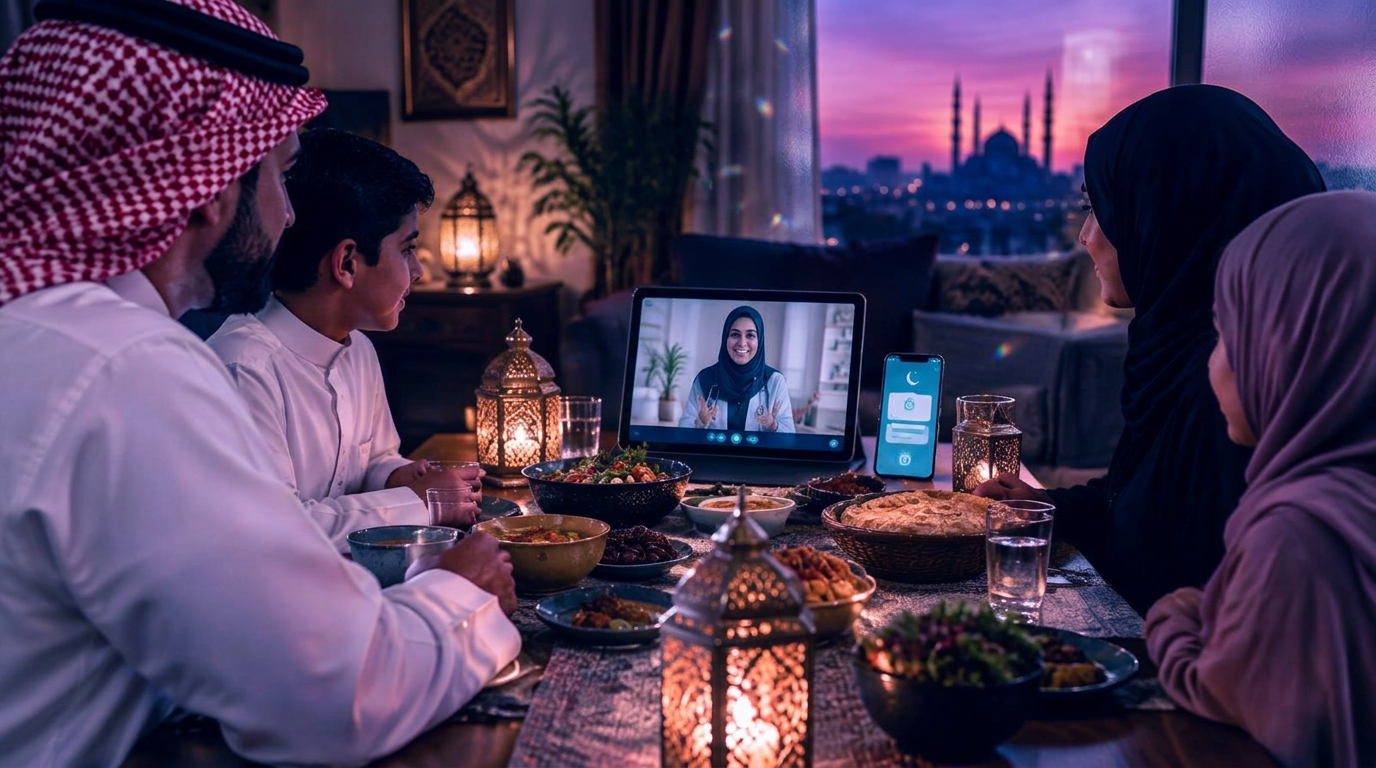
Patients do not live their health in clinics. They live it at family tables, in busy workdays, during Ramadan nights and on their phones. The most effective patient engagement in obesity care across Saudi Arabia and the GCC meets people in those real settings: digitally, culturally and together with their families.
This guide shows how to design an omnichannel, patient-centred engagement layer that supports education, awareness and patient support programmes without crossing into product promotion.
Visual summary
See the whole article at a glance
Follow the journey, then explore how the key ideas connect.
Article journey
Topic mind map
- Why culture changes the design
- A Ramadan-aware patient education plan
- Safety, trust and misinformation
+14 more topics in the full guide
Questions answered (20)
- 1. Why culture changes the design?
- 2. A digital engagement stack that works?
- 3. A Ramadan-aware patient education plan?
- 4. Family-centred activation ideas?
- 5. Safety, trust and misinformation?
- 6. Data protection by design?
- 7. Measuring digital patient engagement?
- 8. The omnichannel patient journey, step by step?
- 9. Designing WhatsApp journeys responsibly?
- 10. Ramadan in more depth: a month-by-month view?
- 11. Engaging the family without adding pressure?
- 12. Building an ethical online community?
- 13. Creator and influencer collaboration: how to do it safely?
- 14. Dealing with misinformation and counterfeit products online?
- 15. Choosing technology partners?
- 16. A ninety-day launch plan?
- 17. Pitfalls to avoid?
- 18. FAQs?
- 19. Create patient-centred engagement with Spectra?
- 20. Sources and review notes?
Why culture changes the design?
- Family decision-making. Parents, spouses and adult children often take part in care choices and daily routines.
- Hospitality and shared meals. Food is love, celebration and respect. Advice that ignores this feels unrealistic.
- Ramadan and Eid. Eating schedules, sleep and activity change dramatically for a month, and many patients need clear guidance from their clinicians on how to manage treatment and nutrition safely.
- Privacy and modesty. Many patients prefer private, gender-appropriate conversations.
- Language. Arabic-first content, with dialect-aware tone and English where useful, builds trust.
A digital engagement stack that works?
| Layer | What it does | Design tip |
|---|---|---|
| WhatsApp journey | Reminders, short education, nurse contact | Keep messages short, bilingual and opt-in |
| Patient app or web portal | Education hub, appointment tracking, secure Q&A | Simple navigation; minimal data entry |
| Short-form video | Explains concepts and routines | Real clinicians, subtitles in Arabic |
| Caregiver channel | Guidance for family members | Focus on support, not monitoring |
| Community space | Peer encouragement | Moderated by trained staff, strong privacy rules |
| Clinician dashboard | Shares engagement signals with care team | Only with explicit patient consent |
Human support should always be one tap away. Digital tools extend a nurse or pharmacist; they do not replace one.
A Ramadan-aware patient education plan?
Start before the month, not during it:
- Four to six weeks before: Encourage patients to discuss their plans with their physician. Share a conversation guide with questions about treatment timing, hydration, meals and warning signs.
- During Ramadan: Offer short, practical content on balanced iftar and suhoor choices, hydration, activity timing and sleep, reviewed by dietitians and clinicians. Maintain access to nurse support.
- After Eid: Re-engage patients to review how the month went and refocus on routines, with a check-in visit where appropriate.
Throughout, content must avoid dose, timing or treatment instructions beyond what the treating clinician has advised.
Family-centred activation ideas?
- Family workshop nights that teach shared, realistic meal planning
- Caregiver guides on supportive language, with examples of what not to say
- Children and teen programmes on healthy habits, delivered without body-shaming
- Community partnerships with mosques' health committees, schools and sports clubs where appropriate
Safety, trust and misinformation?
Social media amplifies both useful education and harmful myths. A responsible programme:
- Publishes content reviewed by clinicians and approved by Medical, Regulatory and Legal
- Uses verified accounts and clear disclosure of who is behind the content
- Avoids influencers promoting prescription products
- Directs patients to licensed pharmacies and physicians, and warns against unregulated sources
- Moderates communities for medical advice and unsafe practices
Data protection by design?
Collect only what you need, with clear consent, and explain how data is used. Follow Saudi and UAE data-protection requirements and keep patient data separate from sales systems. Give patients simple ways to opt out.
Measuring digital patient engagement?
Track opt-in rate, message response, completion of education modules, nurse-contact requests, appointment attendance, caregiver participation, community retention and patient-reported experience. Compare Ramadan and non-Ramadan periods to refine seasonal content.
The omnichannel patient journey, step by step?
A patient living with obesity may interact with the health system and with your programme at many points. Mapping those moments helps you decide where digital and human touchpoints belong.
| Stage | Patient question | Digital touchpoint | Human touchpoint |
|---|---|---|---|
| Awareness | "Is this a medical issue?" | Short video, myth-versus-fact content | Pharmacist or physician conversation |
| Consideration | "Where do I start, and what will they say?" | Doctor-conversation guide, clinic finder | Primary-care appointment |
| Assessment | "What do my results mean?" | Appointment reminders, preparation checklist | Physician and nurse consultation |
| Treatment | "How do I do this safely and sustainably?" | Education modules, reminders, secure messaging | Nurse and dietitian support |
| Maintenance | "How do I keep going?" | Habit content, community, progress tools | Periodic reviews, caregiver involvement |
| Transition | "What if I stop or change plan?" | Information on returning to care | Physician review |
Every digital touchpoint should have a human fallback, and every human touchpoint should be able to leave a clear, consented digital trace so that the next interaction can pick up where the last one ended.
Designing WhatsApp journeys responsibly?
WhatsApp is the most natural channel for many patients in the Gulf. It can also become intrusive if designed carelessly. Principles for a respectful journey:
- Permission first. Only message people who have opted in, and record when and how they did so.
- Short and specific. Aim for messages that can be read in ten seconds, with one idea and one action.
- Bilingual by choice. Let patients choose Arabic or English, and review every template with native editors.
- Scheduled with care. Avoid late-night messages, prayer times and peak family hours where possible, and pause during Ramadan according to patient preference.
- Two-way and human. Make it easy to reply, and ensure a trained nurse or pharmacist answers within a clear timeframe.
- Safe by design. Never ask patients to share detailed medical information in open chat; route sensitive questions to a secure channel or a phone call.
- Easy to leave. Every journey should include a simple, respectful way to stop messages.
A sample four-message welcome sequence could include a thank-you and programme introduction, a short video on what to expect, a link to a caregiver guide and an invitation to book a call with a nurse.
Ramadan in more depth: a month-by-month view?
Ramadan is not only a month of fasting; it reshapes sleep, family gatherings, work hours and food. A patient engagement plan should treat it as a season with its own needs.
- Two to three months before: Review last year's questions and concerns. Brief nurses and pharmacists, and prepare content with clinicians and dietitians.
- Four to six weeks before: Invite patients to speak with their physician about their plan. Provide a conversation guide and an easy way to book a pre-Ramadan visit.
- During the month: Offer concise, practical education on hydration, balanced meals at iftar and suhoor, activity and sleep. Keep helplines available, and make clear that treatment questions go to the treating clinician.
- Eid: Acknowledge celebration with warmth. Offer gentle, non-judgemental guidance for gatherings.
- After Eid: Reconnect, ask how the month went and invite patients to a review.
Content should never replace individual medical advice, and nothing in the programme should encourage patients to change therapy without consulting their doctor.
Engaging the family without adding pressure?
Family is both a powerful support and a source of pressure. Well-meaning relatives may comment on weight or food in ways that feel like criticism. A family-centred programme can help by:
- Providing a short caregiver guide with examples of supportive and unhelpful phrases
- Hosting joint sessions where families learn together, led by a dietitian or nurse
- Encouraging shared routines, such as walking after meals or cooking together, rather than monitoring or policing
- Offering separate spaces for patients who prefer to attend alone
- Giving parents of children and teenagers specialised guidance on avoiding shame and focusing on healthy habits
The golden rule is that the patient stays in control of what is shared and with whom.
Building an ethical online community?
Peer communities can reduce isolation and increase motivation, but they need careful design.
| Element | Good practice |
|---|---|
| Purpose | Support, encouragement and practical tips, not medical advice |
| Moderation | Trained moderators who remove unsafe or promotional content and escalate concerns |
| Privacy | Clear rules on what may be shared; options to use first names or aliases |
| Safety | Visible guidance on contacting a clinician and on reporting adverse events |
| Inclusion | Separate spaces where appropriate, for example for women or for caregivers |
| Content | Neutral education reviewed by clinicians; no promotion of specific prescription products |
| Measurement | Retention, participation and satisfaction rather than pressure to share |
If you host a community on a public social platform, clarify who is responsible for its content, and consider a private, invitation-based environment for sensitive discussions.
Creator and influencer collaboration: how to do it safely?
Creators can help reduce stigma and reach audiences that traditional channels miss. For a regulated health topic, the safe approach is:
- Work with disease-awareness and wellbeing themes, not with prescription products
- Choose creators with credibility and care, including clinicians and people with relevant lived experience who are comfortable speaking responsibly
- Disclose partnerships clearly and follow local advertising and platform rules
- Provide approved fact sheets and require review before posting
- Avoid dramatic transformation stories or any suggestion of guaranteed results
- Have a response plan for comments that ask for medical advice or mention specific medicines
When in doubt, ask Regulatory and Legal before engaging a creator.
Dealing with misinformation and counterfeit products online?
Online conversation about weight-loss medicines moves fast, and misleading claims, unregulated sellers and counterfeit products are a recognised concern worldwide. A responsible programme can help in practical ways:
- Monitor conversations with a social-listening tool and flag recurring myths and questions.
- Respond with clinician-reviewed education that explains, in plain language, why medicines should be obtained from licensed pharmacies on a doctor's prescription.
- Provide a reporting route for patients who suspect a product is not genuine or who experience an adverse event.
- Coordinate with health authorities and pharmacovigilance teams according to local processes.
- Avoid naming products in public educational content; focus on principles patients can apply.
Choosing technology partners?
A digital engagement programme often involves several vendors. Evaluate partners on:
- Compliance with Saudi and UAE data-protection and cybersecurity requirements, including data-hosting location
- Experience with healthcare and with Arabic-language user experience
- Accessibility, including text size, contrast and screen-reader support
- Integration with nurse, pharmacy and clinician workflows
- Clear contracts on data ownership, retention and deletion
- Analytics that separate engagement from commercial data
A ninety-day launch plan?
| Days | Activities |
|---|---|
| 1 to 30 | Patient and clinician interviews, journey mapping, compliance and data-protection review, content outline in Arabic and English |
| 31 to 60 | Build and test WhatsApp templates, education modules and caregiver content; train nurses and moderators; brief partner clinics and pharmacies |
| 61 to 90 | Soft launch with a small group; weekly review of engagement, questions and safety signals; refine content and workflows; prepare the scale-up plan |
Pitfalls to avoid?
- Building an app before testing a simple messaging journey
- Sending too many messages and eroding trust
- Translating English content word for word instead of writing natively in Arabic
- Ignoring the experience of caregivers and family members
- Treating Ramadan content as a last-minute add-on
- Using engagement data for sales targeting without explicit consent
FAQs?
How can digital tools support obesity patients in Saudi Arabia? By delivering simple education, reminders and access to qualified support through channels people already use, such as WhatsApp, with strong privacy protections.
What should an obesity patient education plan include for Ramadan? Early physician conversations, practical clinician-reviewed guidance on meals, hydration and routines, continued nurse access and a post-Eid check-in.
How do you involve families without creating pressure? Use supportive-language training, optional joint sessions and caregiver content that focuses on encouragement rather than monitoring.
Create patient-centred engagement with Spectra?
Spectra Solutions MEA builds digital health solutions, patient activations and support programmes for pharma and healthcare organisations across the GCC. Talk to our team.
Sources and review notes?
- Saudi General Authority for Statistics: Health Determinants Statistics Publication 2023
- Saudi Ministry of Health: Obesity awareness
- WHO: Obesity and overweight
- Saudi clinical practice guideline for adult overweight and obesity
This article is for professional education and programme planning. It does not replace individual medical advice. Medical, Regulatory, Legal and native-language review is required before programme use.
Have a question we did not cover?
Talk to our team about HCP engagement, experiential and digital strategy across the GCC.
Ask our team